Spiritual Tour
A spiritual tour of Bhutan follows a path that has drawn pilgrims across the Himalaya for more than a thousand years. The kingdom's sacred geography begins in the Paro valley at Kyichu Lhakhang, one of the oldest temples in the country, said to have been built in the seventh century to pin down a demoness lying across the Himalaya. From there the route climbs to Paro Taktsang, the Tiger's Nest, clinging to a granite cliff nine hundred metres above the valley floor. The walk up takes two to three hours at an unhurried pace, and most travellers describe the final approach across the waterfall and up the stone stairs as the moment the journey stops being sightseeing and becomes something closer to pilgrimage.
Beyond Paro, the itinerary opens into the central valleys. In Punakha, the dzong sits at the confluence of the Pho Chhu and Mo Chhu rivers and houses some of Bhutan's most revered relics, its courtyards shaded by jacaranda in late spring. A short walk through terraced rice fields leads to Chimi Lhakhang, the fertility temple associated with Drukpa Kunley, the Divine Madman whose unorthodox teachings still shape Bhutanese folk religion. Further east, the glacial valley of Phobjikha holds Gangtey Goenpa and, from late October, the black-necked cranes that circle the monastery three times on arrival, a coincidence local people have read as devotion for generations.
What distinguishes a spiritual journey here from a cultural one is the time built in for practice rather than observation. Mornings can begin with guided meditation led by a resident monk, followed by a session on breathing and mindfulness in a temple courtyard before the day's visitors arrive. Elsewhere, you may take part in a butter lamp offering, receive a blessing from a rinpoche, join a hot stone bath prepared in the traditional way, or simply sit at Dochula Pass while clouds move through the one hundred and eight chortens. Guides trained in Buddhist philosophy explain the iconography of the wheel of life, the meaning of the prayer flags strung along ridgelines, and the calendar that governs when each ritual is performed.
The best months for this journey are March to May and September to November, when skies are clear, and the major tshechu festivals fill dzong courtyards with masked cham dances. Travellers of any faith, or none, are welcome at these sites; what is asked is modest dress, quiet in the shrine rooms, and a willingness to walk clockwise. Journey DMC arranges permits, private vehicles, English-speaking guides and monastery access as part of every spiritual itinerary in Bhutan.
Package
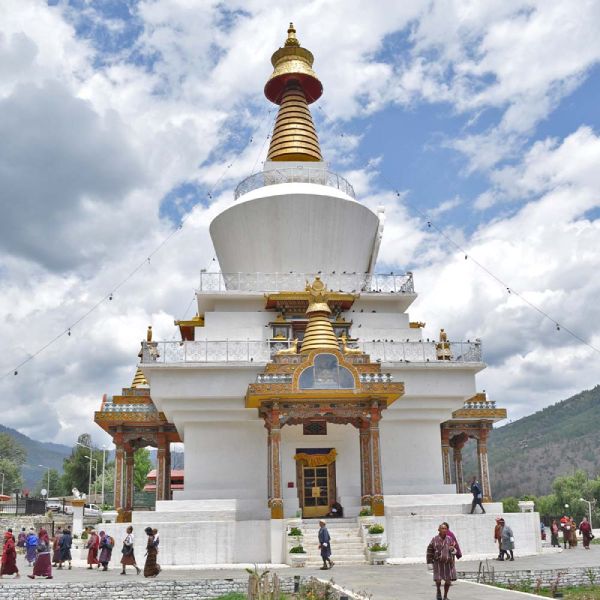
Bhutan: The Land of the Thunder Dragon — A Journey into Nature and Spirituality
Duration: 7Nights 8 Days
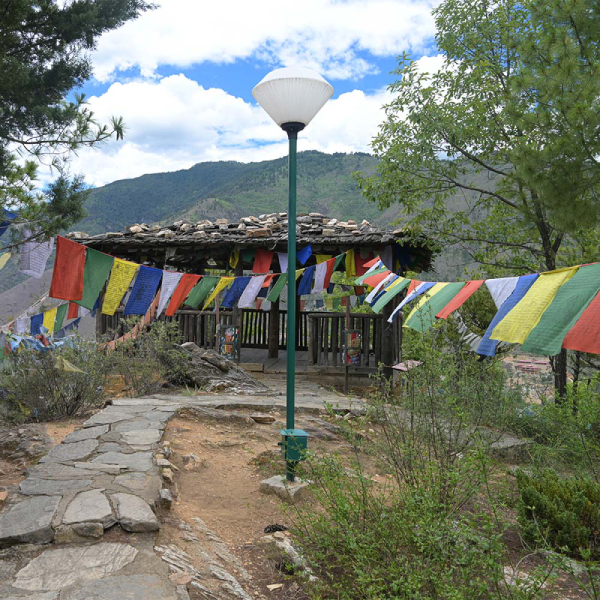
Essence of Bhutan: A 5-Day Journey Through Culture, Nature & Spirituality
Duration: 4Nights 5Days
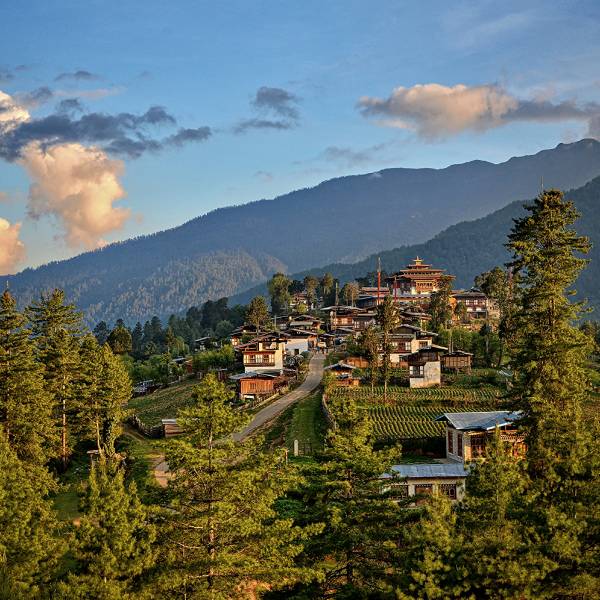
The Vibrant Festivals of Bhutan: A Celebration of Culture and Spirituality
Duration: 12Nights 13Days