Birth Anniversary of Guru Rinpoche
The Birth Anniversary of Guru Rinpoche is one of the most significant religious occasions in Bhutan’s Buddhist calendar. Guru Rinpoche, also known as Padmasambhava, occupies an exceptional place in Bhutanese spiritual life and is revered as a great Buddhist master whose teachings profoundly influenced the Himalayan region. The anniversary is traditionally observed on the tenth day of the fifth month of the Bhutanese lunar calendar, so its Gregorian date changes from year to year. In 2026, the occasion was observed on 24 June, when monasteries, religious institutions, and communities across Bhutan marked the day with prayers and ceremonies.
For Bhutanese Buddhists, Guru Rinpoche is far more than a historical religious teacher. Bhutanese monastic tradition regards him as one of the country’s most important spiritual figures, and government-supported accounts describe Bhutan as one of the major places connected with his journeys. His influence can still be seen in monasteries, sacred caves, temples, religious paintings, festivals, oral traditions, and pilgrimage routes throughout the kingdom.
Traditional accounts place Guru Rinpoche in the Himalayan world during the eighth century. His journeys became associated with the spread and establishment of Vajrayana Buddhist teachings across the region. In Bhutan, numerous places preserve stories about his meditation, teachings, spiritual accomplishments, and encounters with local forces. These narratives have shaped how communities understand their landscape, turning cliffs, caves, valleys, and temples into sacred places connected with Buddhist memory.
Perhaps the best-known location associated with him is Paro Taktsang, or Tiger’s Nest Monastery. According to the traditional account recorded by Bhutan’s official tourism portal, Padmasambhava travelled to the site in the eighth century on the back of his consort, who had taken the form of a tigress. The dramatic monastery now standing against the cliff has become one of Bhutan’s most recognised pilgrimage sites and a powerful symbol of the country’s Buddhist heritage.
Bumthang also contains places closely linked with Guru Rinpoche. Kurjey Lhakhang is regarded as one of Bhutan’s sacred temples associated with him, and the annual Kurjey Tshechu honours his spiritual legacy. Bhutan’s official tourism information highlights the festival as an important summer religious celebration, showing how devotion to Guru Rinpoche remains active within both monastery life and local communities.
On the birth anniversary itself, the atmosphere is primarily devotional. Monks perform prayers and religious ceremonies, while lay devotees visit monasteries and temples to make offerings and receive blessings. Butter lamps may be lit, incense offered, and prayers recited for peace, health, harmony, and favourable circumstances. In Pema Gatshel in 2026, the Dzongkhag Rabdey conducted a Kurim, with local officials and community representatives joining the ceremony to pray and receive blessings.
Prayer is accompanied by the Buddhist idea of creating merit through positive actions. Devotees may use an auspicious day such as this to give offerings, support religious institutions, recite mantras, practise meditation, or consciously act with greater compassion. The emphasis is therefore not simply on remembering Guru Rinpoche’s life but on bringing values associated with Buddhist practice into personal conduct.
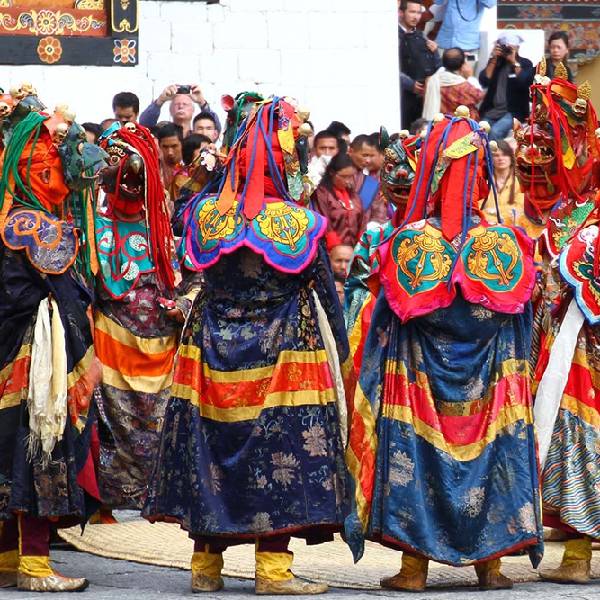
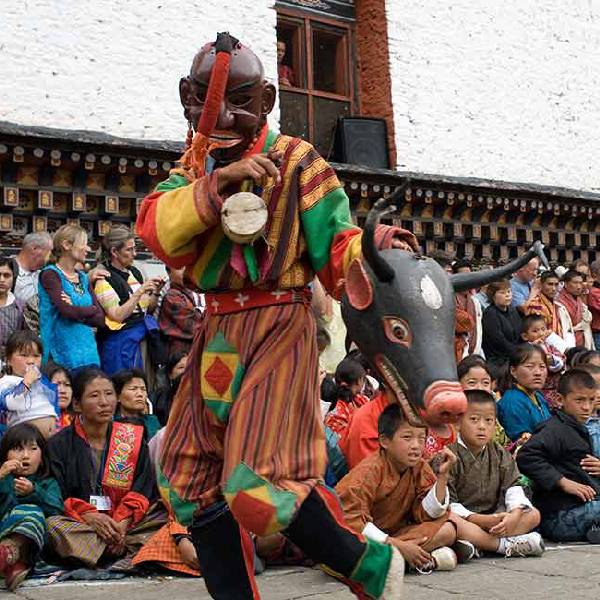
Sacred performance can also accompany commemorations of Guru Rinpoche. Bhutan’s Ministry of Foreign Affairs records a previous national-level anniversary celebration that included prayers, butter-lamp offerings, and a masked dance associated with Guru Rinpoche at Tashichhodzong. Such ritual dances are closely connected with Bhutan’s wider tshechu tradition, where sacred movement, costume, music, and Buddhist teaching come together.
This relationship explains why Guru Rinpoche appears so prominently in festivals throughout Bhutan. Many Bhutanese tshechus are held on the tenth day of a lunar month, recalling important events associated with him. Elaborate masked dances may depict spiritual teachers, protective deities, legendary events, or Buddhist teachings. For local communities, watching these performances is connected with devotion and blessing as well as social celebration.
The anniversary also reveals how closely Bhutanese religion is connected with landscape. Visiting a place associated with Guru Rinpoche can involve walking through forests, climbing toward isolated monasteries, entering ancient temples, or travelling through valleys where local traditions preserve stories about his presence. A pilgrimage therefore combines physical movement with spiritual reflection.
For travelers, 24 June 2026 offered an especially meaningful opportunity to experience this aspect of Bhutanese culture. Rather than expecting one enormous national festival ground, visitors could encounter observances through monasteries, dzongs, temples, and local communities. The exact programme differed between places, with some locations focusing on extended prayers and others connecting the sacred date with local festival traditions.
Visitors attending religious ceremonies should approach them quietly and respectfully. Shoes may need to be removed before entering temples, hats should generally be taken off inside sacred spaces, and photography restrictions must be followed. Monks, elderly worshippers, and individuals making offerings should have sufficient room to complete their prayers without interruption.
Travelers should also recognise that masked dances and ceremonies are not staged solely as tourist entertainment. They belong to an active religious tradition. Observing from an appropriate distance, following instructions from local guides or temple caretakers, and requesting permission before taking close portraits help preserve the dignity of the occasion.
At its heart, the Birth Anniversary of Guru Rinpoche in Bhutan is a celebration of spiritual continuity. Centuries after the period traditionally associated with his journeys through the Himalayas, his presence remains visible in sacred caves, monasteries, prayer ceremonies, festivals, religious art, and stories shared between generations. Through butter lamps, monastery prayers, meditation, offerings, and community worship, Bhutan remembers Guru Rinpoche not simply as a figure from the past, but as an enduring influence on the kingdom’s Buddhist identity and living cultural heritage.