Kurjey Tshechu
Kurjey Tshechu is one of Bumthang’s most spiritually important Buddhist festivals, celebrated at Kurjey Lhakhang in Choekhor Valley. Unlike Bhutan’s larger multi-day tshechus, Kurjey Tshechu is traditionally a one-day religious celebration centred on prayer, sacred masked dances, blessings, and devotion to Guru Rinpoche. Current 2026 festival schedules place the celebration on 24 June 2026, while Bhutan’s official tourism portal confirms that Kurjey Tshechu is a late-June festival held at one of the country’s holiest temples.
The location gives the festival much of its spiritual importance. Kurjey Lhakhang is a registered heritage site in Bumthang and is closely associated with Guru Rinpoche, or Padmasambhava. The name Kurjey refers to a body imprint, recalling the sacred impression traditionally believed to have been left by Guru Rinpoche while meditating at the site.
According to Bhutanese religious tradition, Guru Rinpoche came to Bumthang during the eighth century and meditated in a cave at Kurjey. The site later developed into an important temple complex and remains an active place of pilgrimage. Today, the complex contains three principal temples surrounded by 108 chortens, creating a distinctive sacred landscape within the green Bumthang Valley.
During Kurjey Tshechu, monks, local families, pilgrims, and visitors gather around the temple grounds from early morning. The atmosphere combines quiet devotion with the energy of traditional performance. People arrive wearing their finest gho and kira, make offerings, meet relatives, and spend the day watching ceremonies that have become part of Bumthang’s religious calendar.
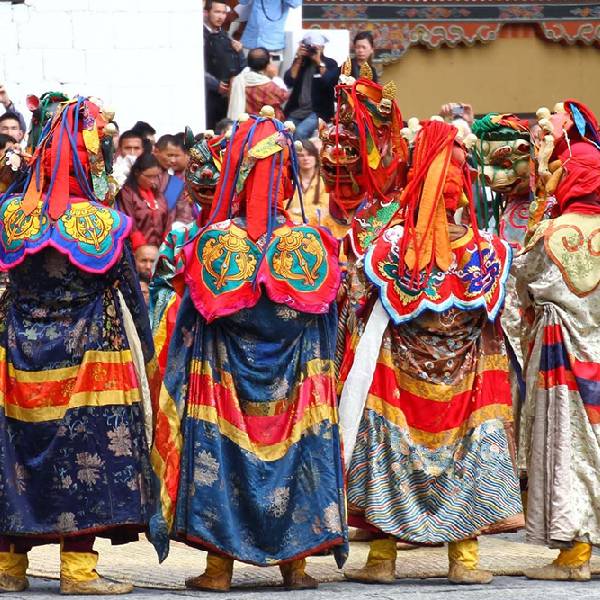
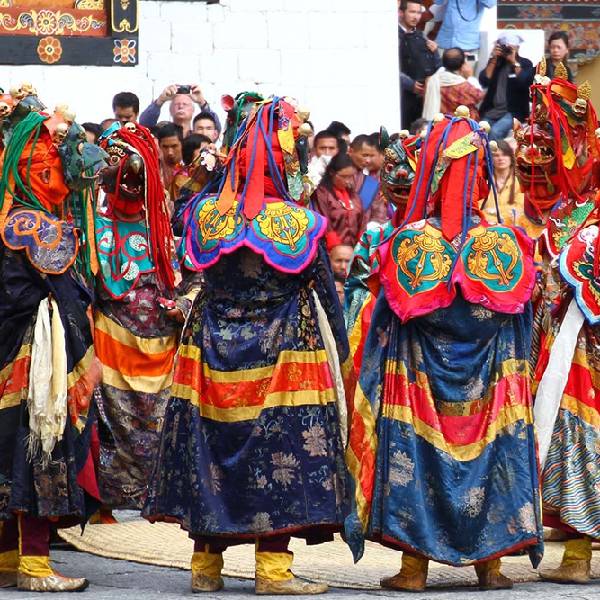
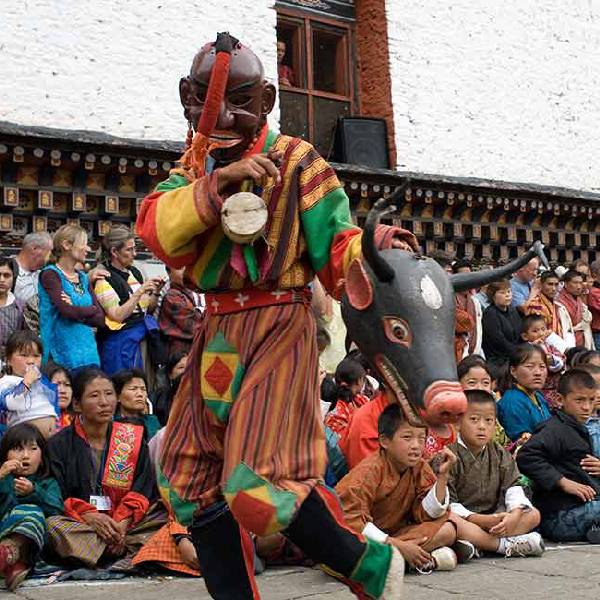
The festival’s main attraction is cham, the sacred masked dance tradition of Bhutan. Monks from Kurjey Lhakhang perform important dances including Guru Tshengye, representing the eight manifestations of Guru Rinpoche, and Shinjay Cham, another religiously significant performance associated with the festival.
These dances are not simply colourful entertainment. Their masks, costumes, movements, and ritual music communicate Buddhist stories and spiritual teachings. Drums, cymbals, horns, and chanting accompany the performers as they move through carefully established sequences. For devotees, witnessing the dances is associated with receiving blessings and reflecting on Buddhist ideas of compassion, wisdom, protection, and overcoming negative influences.
A major highlight takes place in the early morning when the Guru Tshengye Thongdrol is unfurled. This large religious textile depicts Guru Rinpoche and his eight manifestations and is displayed for devotees to receive blessings. Because the thongdrol is exposed only for a limited period, visitors wishing to witness this part of the festival should arrive early.
Kurjey Tshechu is also an important social occasion for the people of Bumthang. Families from different parts of the valley gather at the temple, children attend alongside their parents and grandparents, and local traditions are passed naturally from one generation to the next. Traditional songs and dances may accompany the religious programme, giving the festival a balance between solemn Buddhist practice and community celebration.
The festival is particularly appealing to travelers who want to experience Bhutanese culture in a more intimate setting. Kurjey Tshechu attracts pilgrims and visitors, but its scale is smaller than major festivals in Paro or Thimphu. This makes it easier to appreciate the relationship between the sacred performances, the monastery, and the local community.
Bumthang itself deserves additional time beyond the festival. The region is known for its old monasteries, temples, farming landscapes, traditional villages, and strong connection with Bhutanese Buddhist history. Visiting Kurjey during the festival allows travelers to see the temple not simply as a historic attraction but as a living religious site still used for worship and annual ceremonies. Bhutan’s official tourism portal specifically highlights Kurjey Tshechu as one of the cultural experiences worth attending during a summer visit to the country.
Visitors should dress respectfully and follow local guidance around the temple. Photography may be restricted inside sacred buildings, while monks and worshippers should be given enough space during ceremonies. Travelers should avoid stepping into areas reserved for dancers or standing in front of devotees simply to take photographs.
June falls within Bhutan’s summer season, so visitors should also prepare for changing weather. Light rain protection, comfortable footwear, and layered clothing are useful when spending several hours around the temple grounds.
At its heart, Kurjey Tshechu in Bhutan is a celebration of spiritual memory and living tradition. The sacred body-imprint site of Guru Rinpoche, early-morning thongdrol, masked dances, Buddhist prayers, traditional clothing, and generations of families gathering together create an experience deeply connected with Bumthang’s religious identity. For travelers seeking a meaningful festival away from Bhutan’s largest crowds, Kurjey Tshechu offers a memorable encounter with the country’s Vajrayana Buddhist heritage.