Domkhar Tshechu
Domkhar Tshechu is an intimate three-day Buddhist festival celebrated in the peaceful Chumey Valley of Bumthang. Rather than taking place inside one of Bhutan’s large district dzongs, the festival grows from village religious life, drawing families from Domkhar and surrounding communities to a local temple for sacred dances, prayers, folk performances, and blessings. In 2026, Domkhar Tshechu was held from 26 to 28 April in Domkhar, Chumey, Bumthang.
Bumthang has an unusually rich concentration of Buddhist temples and religious traditions. Its landscape is commonly divided into the valleys of Choekhor, Chumey, Tang, and Ura, each with its own villages, monasteries, sacred places, and annual ceremonies. Domkhar lies in Chumey Valley, giving the festival a rural setting quite different from the larger celebrations visitors may encounter in Paro or Thimphu.
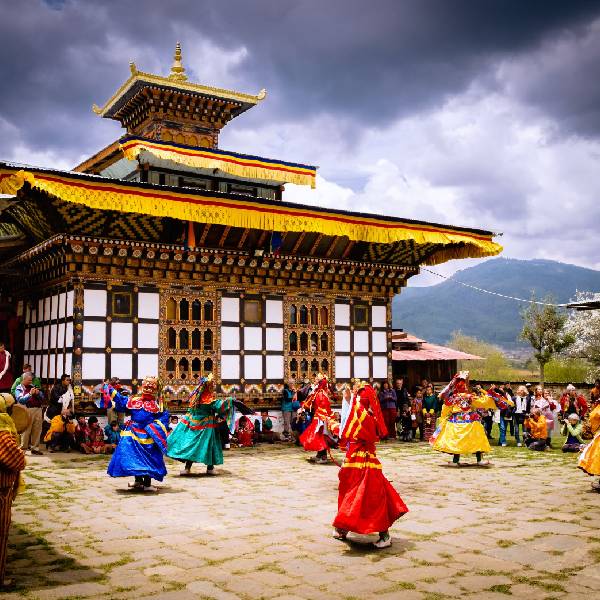
The celebration is centred around Domkhar Lhakhang, where local residents gather over three days. Festival descriptions identify sacred masked dances and village folk performances as its main features. The smaller setting allows the event to retain a strong community character, with spectators often standing only a short distance from dancers, musicians, monks, relatives, and neighbours they know personally.
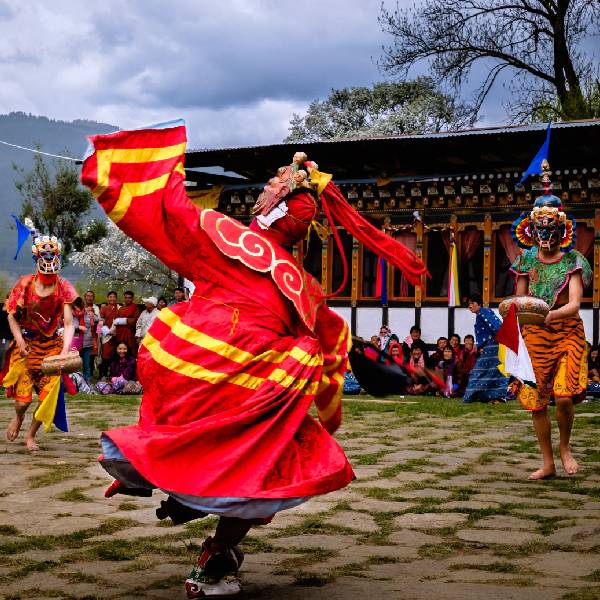
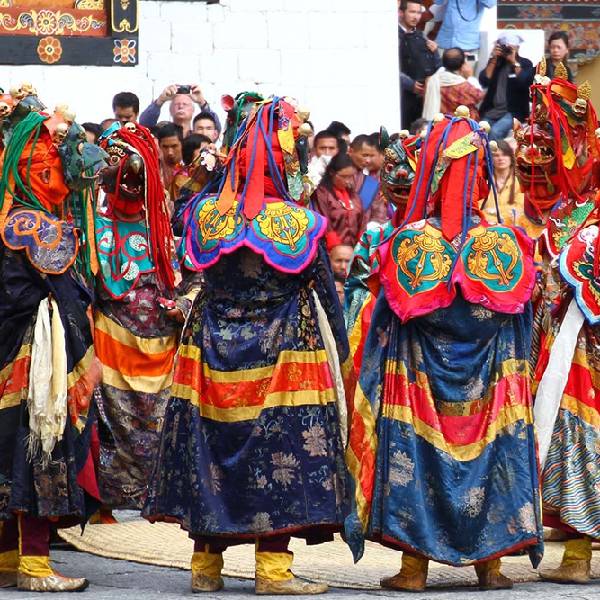
The most visually striking ceremonies are the cham dances. Performers appear in elaborate robes and masks representing figures from Bhutanese Buddhist traditions. Their movements follow established ritual patterns accompanied by drums, cymbals, horns, and other ceremonial instruments. Although the colourful costumes naturally attract photographers, cham is fundamentally a religious practice rather than a theatrical show created for visitors.
Domkhar is particularly associated with Peling dance traditions connected with Tertön Pema Lingpa, one of Bhutan’s most influential Buddhist masters and treasure revealers. Festival accounts describe several of the chams performed here as belonging to this spiritual lineage. This connection is especially meaningful in Bumthang, where Pema Lingpa’s religious legacy is woven into numerous temples, sacred sites, rituals, and local histories.
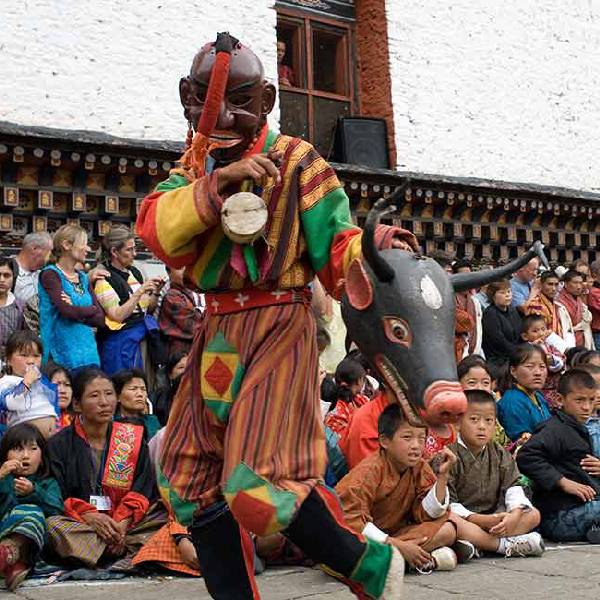
The masked dances are interspersed with traditional folk performances by local villagers. Men and women appear in formal Bhutanese dress, adding music, song, and social warmth between the more solemn religious ceremonies. These performances give the festival a rhythm that moves between devotion and celebration rather than separating religious practice from everyday community life.
For local families, attending the tshechu also means spending time together. Residents dress in their best gho and kira, visit the temple, meet relatives, share food, and watch the performances throughout the day. Children grow up observing ceremonies their parents and grandparents have attended before them. Through this repeated participation, knowledge of the dances, prayers, festival etiquette, clothing, music, and religious stories continues from one generation to another.
One of the most important moments traditionally comes on the final day, when a large sacred textile known as a thongdrol is displayed. The religious image is shown only on special occasions and is treated as an object of blessing rather than simply as a work of art. Local festival descriptions identify the thongdrol display as the principal concluding highlight of Domkhar Tshechu.
Devotees believe that attending the sacred ceremonies and viewing the religious image brings spiritual benefit. The gathering therefore attracts people not only from Domkhar itself but from other parts of Bumthang. The final day can become especially lively as residents arrive for blessings, worship, performances, and the concluding ceremonies.
What makes Domkhar Tshechu different from Bhutan’s larger festivals is its scale. There are fewer layers between the visitor and the community hosting the event. A village courtyard becomes the festival ground, residents themselves participate in performances, and daily rural life remains visible around the ceremonies. This creates a more personal introduction to Bhutanese festival culture.
The timing also makes Domkhar particularly interesting for travelers exploring Bumthang in spring. In 2026, Domkhar Tshechu ran from 26 to 28 April, immediately before the nearby Ura Yakchoe, which began on 28 April and continued into early May. Travelers planning carefully around the festival calendar could therefore experience two distinct Bumthang traditions during the same broader journey.
Beyond the festival ground, Chumey Valley offers a quiet landscape of traditional settlements, agricultural land, wooded hills, temples, and mountain scenery. Spending additional time in the area helps place the celebration in context. Domkhar Tshechu is closely connected with the people who live in this landscape throughout the year, rather than existing as an isolated annual performance.
Visitors should dress respectfully and follow local guidance around the temple. Religious objects and masks should never be touched without permission, and photographers should avoid standing in front of worshippers or moving into areas reserved for performers. Close portraits of monks, dancers, elderly residents, and children are best taken only after asking.
It is also useful to arrive early. The quieter hours before the main performances provide time to observe families gathering, musicians preparing, and the festival space gradually coming to life. Because the programme follows religious requirements, exact dance times can shift, so travelers should allow flexibility rather than planning around a rigid hourly schedule.
At its heart, Domkhar Tshechu in Bhutan is a village tradition sustained through participation. Sacred masked dances, Peling religious heritage, folk songs, family gatherings, traditional clothing, and the final display of the thongdrol all become part of one three-day celebration. For travelers interested in experiencing Bhutanese culture beyond its largest festival venues, Domkhar offers a quieter and more personal view of how Buddhist faith and community life continue to meet in the valleys of Bumthang.