Haa Tshechu
Haa Tshechu is an important annual Buddhist festival celebrated in the peaceful Haa Valley of western Bhutan. The three-day event brings monks, local families, traditional performers, and visitors together for sacred masked dances, prayers, blessings, folk performances, and community gatherings. Compared with the larger festivals of Paro and Thimphu, Haa Tshechu offers a more intimate atmosphere where visitors can observe Bhutanese religious traditions within a close-knit mountain community. The festival is traditionally held at Lhakhang Karpo, also known as the White Temple of Haa. The currently published schedule lists the 2026 Haa Tshechu from 19 to 21 September, although final dates should be reconfirmed before travel.
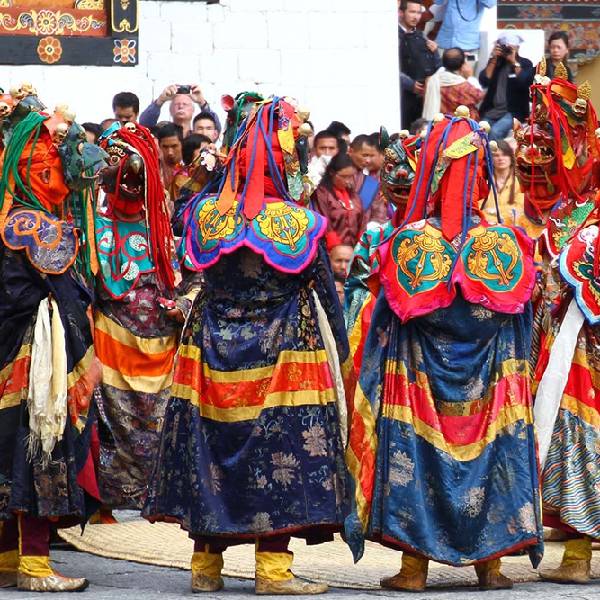
Lhakhang Karpo is one of the most important religious sites in Haa Valley and provides a beautiful setting for the annual celebration. During ordinary days, the temple has a peaceful atmosphere, but during the tshechu its courtyard becomes filled with monks, musicians, dancers, families, and worshippers arriving from surrounding villages. Traditional Bhutanese clothing, ceremonial music, religious masks, and colourful decorations create a striking scene against the surrounding mountains.
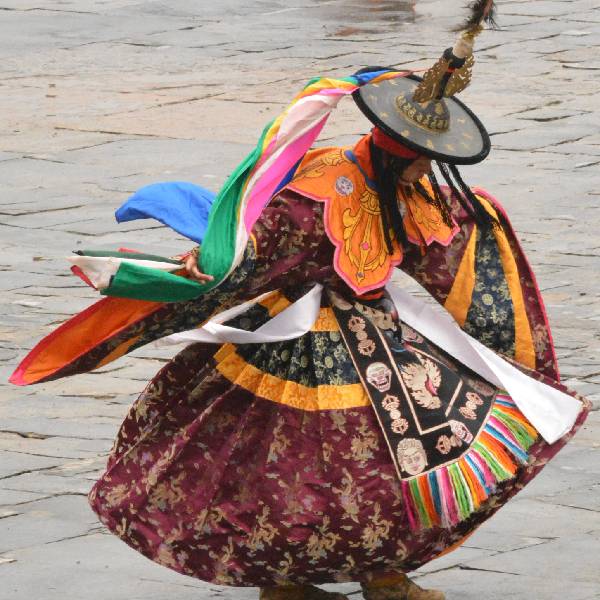
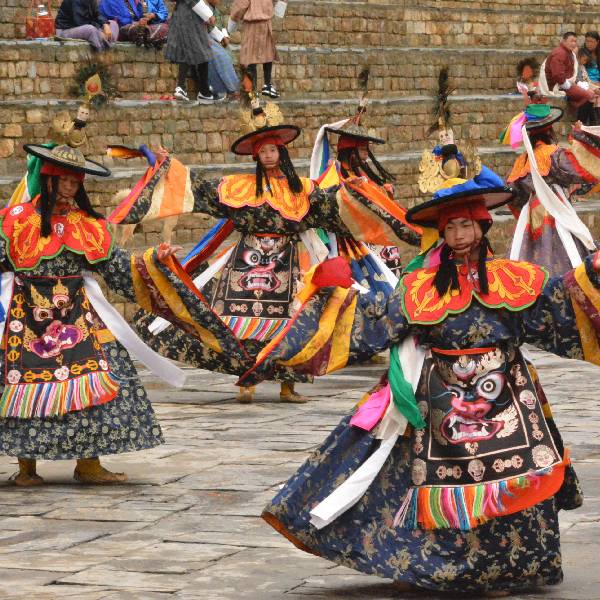
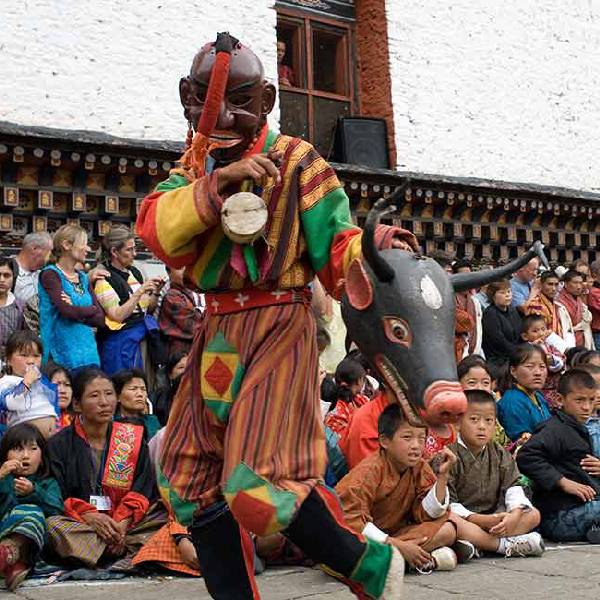
The central attraction of Haa Tshechu is cham, Bhutan's sacred masked dance tradition. Monks and trained performers wear elaborate masks and ceremonial robes representing Buddhist deities, spiritual protectors, teachers, animals, and figures from religious stories. Their carefully controlled movements are accompanied by drums, cymbals, horns, and other traditional instruments.
Cham should not be viewed simply as entertainment. Each performance carries religious meaning and may communicate Buddhist teachings about compassion, morality, impermanence, spiritual protection, and the consequences of human actions. For devotees, witnessing these dances is considered spiritually meaningful and is associated with receiving blessings and creating merit.
The festival is closely connected with Guru Rinpoche, or Padmasambhava, one of the most respected figures in Bhutanese Vajrayana Buddhism. Guru Rinpoche played an important role in the development of Buddhism throughout the Himalayan region, and numerous Bhutanese temples, monasteries, caves, and festivals preserve traditions associated with him. Tshechus held across Bhutan commemorate important religious events and keep these teachings alive through ritual and community participation.
Haa Tshechu is equally significant as a social occasion. Families often travel from different parts of the valley wearing their finest gho and kira, Bhutan's traditional national dress. Relatives meet, neighbours spend time together, children watch religious performances, and older generations participate in ceremonies they have attended for many years.
This involvement helps cultural knowledge pass naturally from one generation to another. Children learn how to behave around temples, recognise important dances, understand religious customs, and become familiar with traditional music and clothing simply by attending the festival with their families.
Between sacred performances, visitors may also see traditional folk songs and dances performed by local men and women. These presentations create a lighter atmosphere while showcasing the cultural identity of Haa. Prayer, music, conversation, shared meals, traditional clothing, and religious rituals take place within the same festival environment, showing how closely spiritual and everyday community life are connected in Bhutan.
The location adds considerably to the experience. Haa Valley is surrounded by forests, farmland, traditional settlements, temples, and mountain scenery. It receives fewer international visitors than Paro or Thimphu, which helps Haa Tshechu maintain a strongly local character. Travelers coming from Paro can reach the valley through Chele La, the high mountain pass connecting the two regions.
Spending additional time in Haa can make the festival experience even more meaningful. Visitors can explore traditional villages, temples, rural landscapes, and local architecture while gaining a better understanding of the communities that organise and participate in the tshechu.
For travelers interested in photography, the festival offers many memorable scenes, including masked dancers, musicians, traditional clothing, temple architecture, and families gathering in the courtyard. However, religious ceremonies should always be treated respectfully. Visitors should avoid standing between dancers and worshippers, entering restricted areas, or interrupting monks during rituals.
Photography inside temple buildings may be prohibited, and permission should be requested before taking close portraits of monks, elderly devotees, children, or individual performers. Visitors should also follow local instructions regarding footwear, seating, and behaviour around sacred objects.
Arriving early is useful because festival grounds become busier as the day progresses. Exact performance times may change according to religious requirements, so travelers should avoid planning their visit around only one dance or ceremony. Allowing several hours provides a better opportunity to experience the changing atmosphere of the festival.
At its heart, Haa Tshechu in Bhutan is a celebration of faith, cultural identity, and community connection. Sacred masked dances, Buddhist prayers, folk music, traditional clothing, family gatherings, and the peaceful surroundings of Haa Valley come together over three meaningful days. For travelers seeking a festival experience away from Bhutan's largest crowds, Haa Tshechu provides a warm and authentic introduction to the country's living Buddhist traditions and mountain community life.