Jakar Tshechu
Jakar Tshechu is one of the major annual Buddhist festivals celebrated in Bumthang, a region deeply connected with Bhutan’s religious history. Held at Jakar Dzong in the Choekhor Valley, the festival brings monks, local families, performers, and visitors together for several days of sacred masked dances, prayers, traditional music, and community gatherings. The published 2026 Bhutan festival calendar lists Jakar Tshechu from 18 to 21 October 2026.
The festival is closely associated with Guru Rinpoche, or Padmasambhava, whose teachings have had a profound influence on Vajrayana Buddhism in Bhutan. The existing Jakar Tshechu page also identifies devotion to Guru Rinpoche as a central part of the celebration. Through religious ceremonies and symbolic performances, the festival keeps Buddhist teachings connected with everyday community life.
Jakar Dzong provides a remarkable setting for the event. Often translated as the “Castle of the White Bird,” the fortress stands on a ridge above the Chamkhar Valley. Traditional accounts connect its name with a white bird that appeared while religious leaders were searching for a suitable place to establish a monastery. The site subsequently developed into one of Bumthang’s important religious and administrative landmarks.
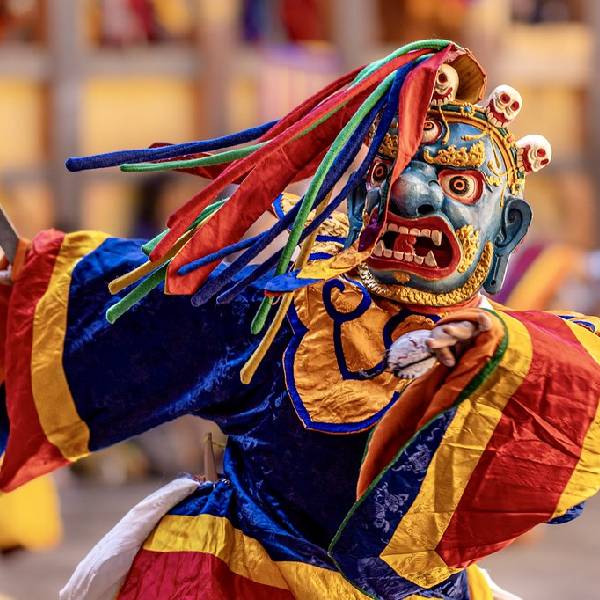
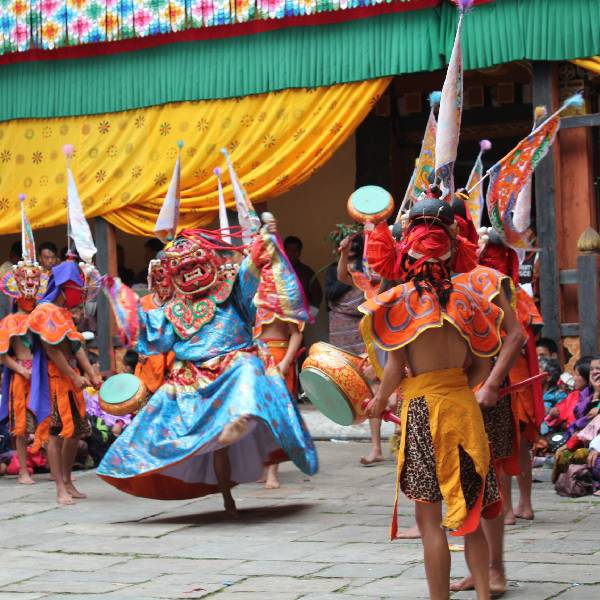
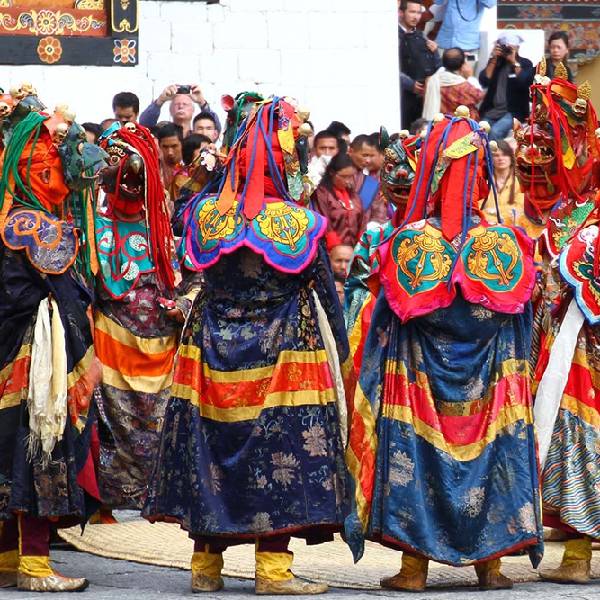
During the tshechu, the dzong courtyard becomes the main performance space. The most visually striking events are the cham dances, in which monks and trained performers wear elaborate masks, layered robes, ceremonial hats, and brightly decorated costumes. Drums, cymbals, horns, and other ritual instruments accompany the dancers as they move through carefully established sequences.
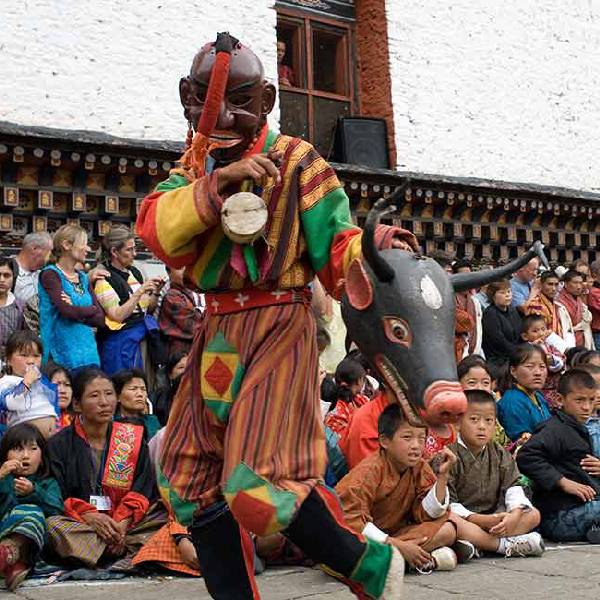
These performances should not be viewed simply as entertainment. Bhutanese tshechus use sacred dance to communicate Buddhist stories, moral teachings, and spiritual ideas. Masks can represent protective deities, enlightened figures, animals, or characters associated with Buddhist tradition. The movements may express ideas about compassion, wisdom, impermanence, protection, and overcoming harmful influences.
Different dances create noticeably different moods. Some are slow and solemn, while others are energetic and dramatic. The combination of religious symbolism, rhythmic music, detailed costumes, and the enclosed architecture of Jakar Dzong creates an atmosphere quite different from an ordinary cultural performance.
The festival is equally important for the people of Bumthang as a social gathering. Families travel from surrounding villages wearing their finest gho and kira, spend hours watching the ceremonies, meet relatives and neighbours, and participate in prayers. Children attend alongside parents and grandparents, allowing knowledge of local customs, religious etiquette, music, clothing, and festival traditions to continue naturally between generations. Bhutanese tshechus generally function as both religious occasions and important community gatherings.
Traditional songs and folk dances can appear between the sacred ceremonies, adding a lighter rhythm to the programme. Local residents gather around the courtyard, share food, talk with friends, and wait for the next ritual performance. This mixture of worship and social interaction is part of what makes Bhutanese festival culture distinctive.
Bumthang itself adds considerable depth to the experience. Travelers attending Jakar Tshechu are not visiting an isolated festival venue but entering a valley known for temples, monasteries, traditional settlements, farmland, and Buddhist pilgrimage sites. Staying for several days provides time to experience both the festival and the wider cultural landscape.
For photographers, Jakar Tshechu offers striking scenes of masked dancers, musicians, traditional dress, fortress architecture, and spectators filling the courtyard. Photography should nevertheless remain secondary to the religious ceremony. Visitors should avoid entering areas reserved for performers, standing directly in front of worshippers, or blocking processions.
Temple interiors may have photography restrictions, and close portraits of monks, children, elderly devotees, or individual residents should be taken only with permission. Modest clothing is appropriate, and visitors should follow instructions from local officials, guides, and monastery representatives.
Arriving early is worthwhile because the courtyard becomes increasingly busy once the main performances begin. Festival programmes may continue for much of the day, and exact dance times can shift according to religious requirements. Travelers will usually gain more from spending several hours at the venue than arriving only for one scheduled performance.
October is also an attractive period for exploring Bumthang, but mornings and evenings can be cool. Comfortable footwear and layered clothing are useful, especially when spending a full day outdoors or moving between the dzong and other nearby religious sites.
At its heart, Jakar Tshechu in Bhutan brings Buddhist faith and community life together inside one of Bumthang’s most historic settings. Sacred masked dances, ritual music, prayers, traditional clothing, family gatherings, and the dramatic surroundings of Jakar Dzong create an experience rooted in living tradition. For travelers looking beyond Bhutan’s larger festivals in Paro and Thimphu, Jakar Tshechu offers a meaningful way to experience the religious and cultural character of Bumthang.