Dromche
Dromche is a religious festival tradition found in Bhutan, with Punakha hosting its best-known celebration. Rather than functioning simply as a colourful dance festival, Punakha Dromche carries strong historical and spiritual meaning. Ceremonies recall Bhutan’s seventeenth-century struggle against Tibetan forces while honouring the protective powers associated with the country’s Buddhist heritage. The festival unfolds around the magnificent Punakha Dzong through religious rites, processions, traditional costumes, sacred dances, and dramatic historical reenactments. Bhutan’s official tourism portal identifies Punakha Dromche as one of the kingdom’s distinctive annual festivals.
For 2026, Punakha Dromchoe was held from 24 to 26 February, immediately before the Punakha Tshechu. Punakha Dzongkhag Administration documented the arrival of participating pazaps on 23 February as preparations began for the annual celebration. The district also organised the combined Dromchoe and Tshechu period as a six-day community event.
Punakha provides an especially powerful setting for the festival. The great dzong stands where the Pho Chhu and Mo Chhu rivers meet, surrounded by mountains and fertile valley scenery. Long before modern Thimphu became Bhutan’s political centre, Punakha held enormous administrative and religious importance. Its dzong continues to play a major ceremonial role and remains closely connected with Bhutan’s central monastic community.
The historical theme of Punakha Dromche goes back to the period of Zhabdrung Ngawang Namgyel, the seventeenth-century leader associated with Bhutan’s political unification. The festival recalls Bhutanese resistance to Tibetan invasions and transforms episodes from that period into ritualised performance. Bhutan’s Department of Tourism describes the event as a celebration that tells the story of Bhutan’s victory against Tibet, with dances inspired by historical events.
One of the defining groups involved in the celebration is the pazaps, traditional militia representatives who appear in historical-style clothing and equipment. Punakha’s 2026 district records specifically mention pazaps arriving from Wang-Tsochey areas of Thimphu as well as Toedwang and Kabjisa in Punakha to participate in the annual Dromchoe. Their presence gives the festival a character that differs sharply from an ordinary tshechu focused primarily on Buddhist masked dance.
The festival’s most memorable sequence recreates the defence of Bhutan and the protection of a sacred relic associated with Zhabdrung Ngawang Namgyel. Traditional accounts describe a ceremonial procession toward the Mo Chhu riverbank, where a symbolic act recalls how the Bhutanese leader protected the sacred relic by misleading invading forces into believing it had been thrown into the river. The ritual preserves a piece of national history through collective performance rather than through written storytelling alone.
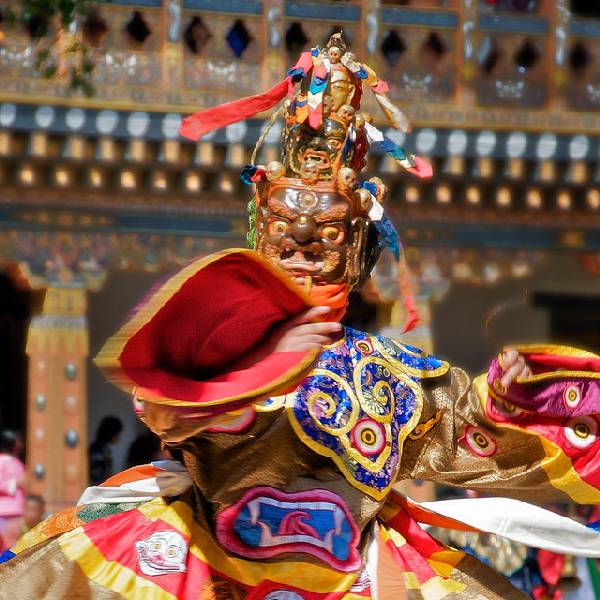
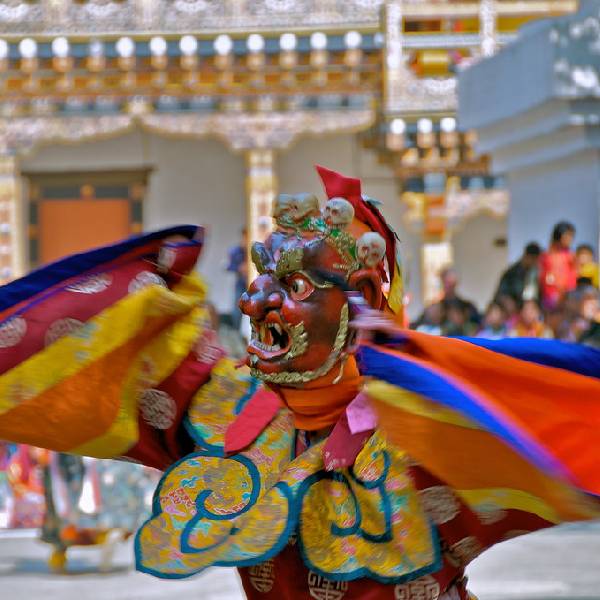
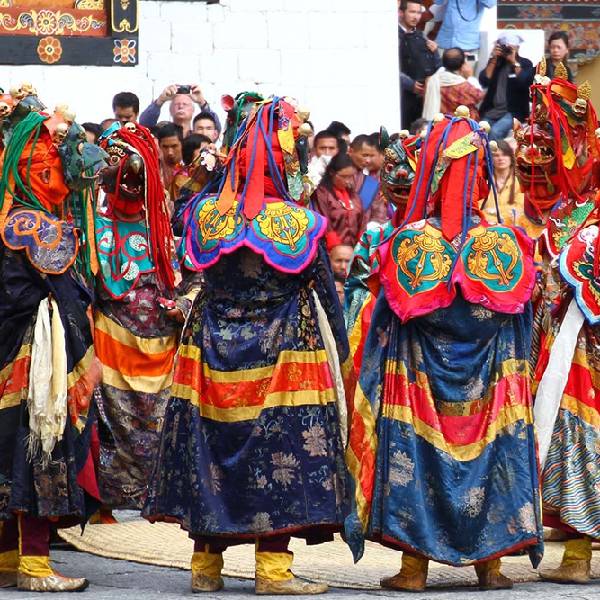
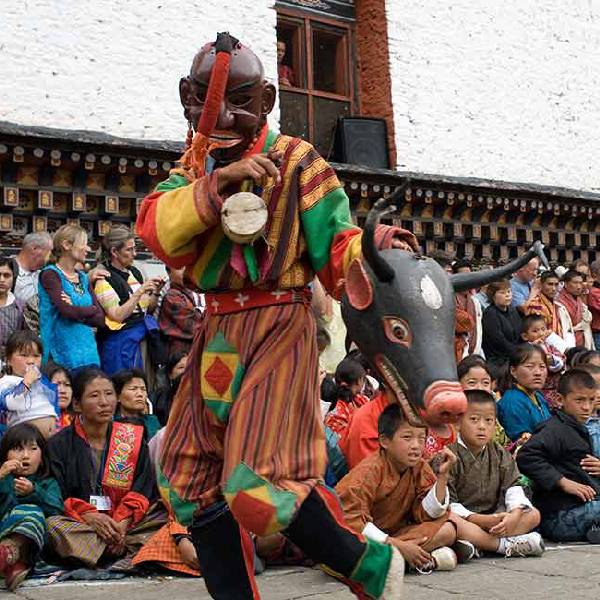
Religious ceremonies remain central throughout the event. Monks conduct prayers while ritual instruments, chanting, offerings, and sacred performances fill the dzong. Cham, Bhutan’s masked dance tradition, may accompany the wider festival sequence. Dancers wear elaborate masks and robes representing Buddhist protectors and spiritual figures, with movements shaped by religious meaning rather than stage entertainment alone. Bhutan’s official tourism material specifically notes masked dances as part of Punakha Dromche.
Drums, horns, cymbals, and other ceremonial instruments create a powerful atmosphere inside the courtyards. Their rhythms accompany dancers and processions, but it would be misleading to define the word Dromche simply as “meeting of the drums.” The festival’s identity comes from a much wider combination of ritual, historical remembrance, protective Buddhist practices, and community participation.
For local residents, Dromche also provides an opportunity to gather with relatives and neighbours. People arrive in traditional gho and kira, attend prayers, watch the ceremonies, share food, and spend extended periods around Punakha Dzong. The festival therefore works on several levels at once: it is a Buddhist observance, a reenactment of national history, and an annual social gathering.
Travelers can experience another side of Bhutan here compared with the internationally famous Paro and Thimphu tshechus. The combination of historic warriors, sacred ceremonies, dramatic processions, and the architectural setting of Punakha Dzong gives Dromche a distinctive identity. Bhutan’s tourism authorities specifically recommend Punakha Dromche for visitors interested in festivals combining dance, procession, and historical narrative.
The timing can also be useful for cultural travel. Punakha Dromche is traditionally followed almost immediately by Punakha Tshechu, allowing visitors to see two related but different celebrations during one stay. In 2026, Dromchoe ran from 24–26 February, followed by Punakha Tshechu beginning on 27 February.
Visitors should arrive early because important rituals can attract substantial local crowds. Photography is rewarding, but people involved in prayer, military reenactments, or sacred performances should be given enough room to participate without interruption. Temple and dzong photography restrictions should always be followed, and visitors should avoid entering areas reserved for monks or ceremonial performers.
Late February mornings in Punakha can be cool, while daytime temperatures are often comfortable. Layered clothing is practical, particularly when spending several hours sitting or standing inside the dzong complex.
At its heart, Dromche in Bhutan is a festival where spiritual belief and national memory meet. Punakha’s sacred fortress becomes a stage for events remembered across generations, while monks, pazaps, dancers, families, and local communities continue responsibilities passed down through tradition. For visitors interested in understanding Bhutan beyond scenic landscapes, Punakha Dromche offers a powerful example of how history remains alive through ritual, performance, faith, and community participation.