Gangtey Goenpa Tshechu
Gangtey Goenpa Tshechu, also called Gangtey Tshechu, is a three-day Buddhist festival celebrated at one of the most important monasteries in central Bhutan. Set above the broad Phobjikha Valley in Wangdue Phodrang, the festival brings monks, village families, religious practitioners, and visitors together for sacred masked dances, prayers, traditional songs, blessings, and community gatherings. In 2026, Gangtey Goenpa Tshechu will take place from 24 to 26 September at Gangtey Gonpa.
The location gives the celebration an identity unlike festivals held inside Bhutan's larger district dzongs. Gangtey Gonpa stands prominently above Phobjikha, surrounded by wooded mountains, farms, traditional settlements, and open valley landscapes. The monastery is an important institution of the Nyingma school of Buddhism and serves as the principal seat of the religious tradition associated with Bhutanese treasure revealer Pema Lingpa.
Gangtey Gonpa's history reaches back to the early seventeenth century. The monastery was established in 1613 by Gyalsé Pema Thinley, the grandson of Pema Lingpa and the first Gangteng Tulku. Local religious history also preserves a tradition that Pema Lingpa had visited Phobjikha and foretold that one of his descendants would establish an important centre of Buddhist teaching there. That connection continues to influence the religious character of the annual tshechu.
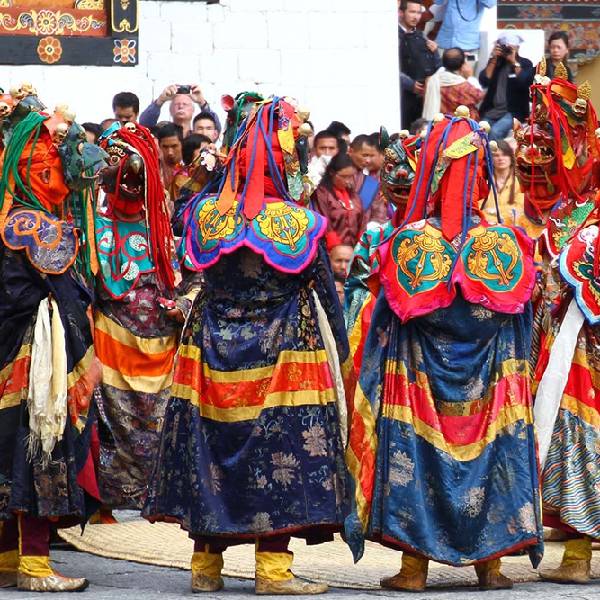
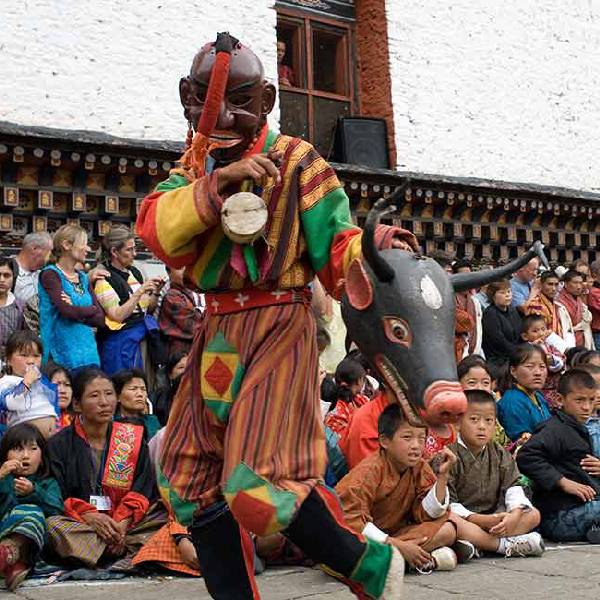
The festival's most striking ceremonies are its sacred masked dances, or cham. Elaborately dressed performers enter the monastery courtyard wearing robes and symbolic masks representing figures drawn from Vajrayana Buddhist tradition. Their movements are accompanied by drums, cymbals, horns, and ritual music. These dances are not ordinary theatrical performances. They form part of religious practice and communicate Buddhist ideas through movement, costume, symbolism, and sacred narrative.
What particularly distinguishes Gangtey Tshechu is its connection with the Peling tradition of Pema Lingpa. Several dances performed during the festival follow this lineage, while some forms are associated specifically with Gangtey and its surrounding communities. This gives the event a local religious identity rather than making it simply another version of the larger tshechus held elsewhere in Bhutan.
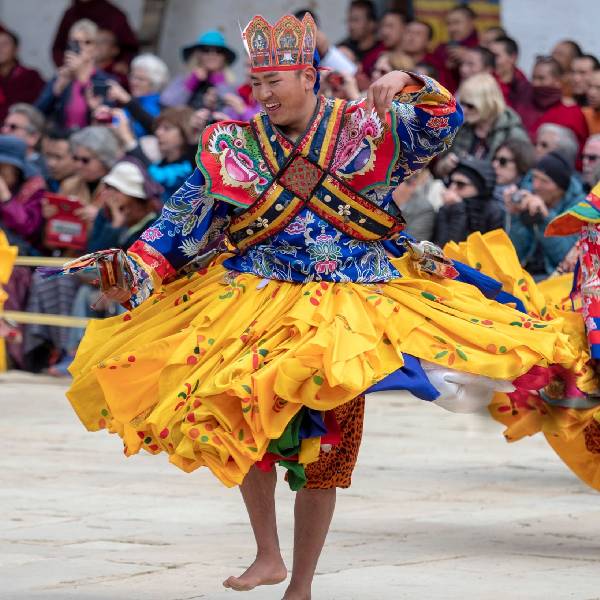
Traditional folk songs and dances create a different mood between the formal religious performances. Local men and women participate in colourful dress, giving the courtyard periods of relaxed social celebration between the more solemn ceremonies. Families often arrive wearing their finest gho and kira, while jewellery and festival clothing add further colour to the gathering. For residents of Phobjikha and nearby settlements, the tshechu is therefore both a spiritual occasion and a chance to reconnect with relatives and neighbours.
The celebration reaches an important point on its concluding day. Published 2026 festival calendars list the display of a thongdrol on 26 September, the final day of the event. A thongdrol is a large sacred religious textile revealed only on special occasions. Devotees traditionally gather to view the image and receive its blessing before it is carefully rolled away again.
Gangtey Tshechu also concludes with a distinctive spiritual ceremony known as Nguedup Langwa, described as the receiving of blessings connected with wisdom and spiritual power. This final blessing gives the festival a strong devotional conclusion after several days of dances, prayers, offerings, music, and community participation.
The surrounding Phobjikha Valley makes attending the festival especially memorable. Gangtey Gonpa overlooks the valley that later becomes an important winter habitat for migratory black-necked cranes. The birds generally belong to a later part of Phobjikha's seasonal cycle, so visitors attending the September tshechu should not assume that crane sightings will form part of the festival experience. The monastery and valley are nevertheless closely associated with the species and its conservation.
For travelers, Gangtey Tshechu offers a more intimate festival environment than Bhutan's largest celebrations. The monastery courtyard brings spectators comparatively close to the dancers and musicians, while the surrounding villages keep rural life visible beyond the festival grounds. Spending time in the area before or after the ceremonies can provide a broader understanding of Phobjikha's farms, religious sites, walking paths, and traditional settlements.
Visitors should arrive early, particularly on the final day when the thongdrol and concluding blessings may attract additional devotees. Exact daily schedules can follow religious requirements rather than rigid tourist timetables, so allowing several hours at the monastery is preferable to planning a brief stop.
Respectful behaviour is essential. Masked dances and blessings are religious practices, even when they are visually spectacular. Visitors should avoid entering performance areas, blocking worshippers, touching ritual objects, or standing directly in front of monks during ceremonies. Photography rules inside the monastery should be followed carefully, and permission is appropriate before taking close portraits of individual residents.
Late September in Phobjikha can bring changing mountain weather, particularly in the morning and evening. Warm layers, comfortable footwear, and rain protection are useful when spending a full day around the monastery and valley.
At its heart, Gangtey Goenpa Tshechu in Bhutan is a celebration shaped by place and lineage. Peling masked dances unfold in the courtyard of a monastery founded by Pema Lingpa's descendant, families gather from across the valley, folk traditions share space with Buddhist ritual, and the celebration closes with sacred blessings. For travelers interested in Bhutan's living religious culture, Gangtey offers a powerful example of how monastery, community, landscape, and inherited spiritual practice remain connected.