Gasa Tshechu
Gasa Tshechu is one of Bhutan’s distinctive regional Buddhist festivals, celebrated in the remote northern district of Gasa. Surrounded by high mountains and scattered settlements, the festival brings monks, highland communities, families, and visitors together for several days of sacred masked dances, traditional music, folk performances, prayers, and social gatherings. For 2026, the Gasa Dzongkhag Administration officially scheduled the festival from 25 to 28 March at Gasa Dzong, making it a four-day celebration.
The setting immediately gives Gasa Tshechu a different character from festivals in Bhutan’s larger towns. Gasa lies in the extreme northwest of the country and includes the gewogs of Khatoed, Khamoed, Laya, and Lunana. The district administration describes the region as remote and rugged, shaped by Himalayan peaks, glacial landscapes, sacred trails, hot springs, and communities that continue to maintain strong local customs.
The festival is centred on Gasa Dzong, where ceremonies take place in the Dzong’s Drasha Courtyard and Phu-lhakhang. Standing above 2,800 metres, the fortress provides a dramatic mountain setting for the annual gathering. According to the Gasa administration, the tshechu is one of the district’s largest cultural events and attracts devotees and visitors from different communities.
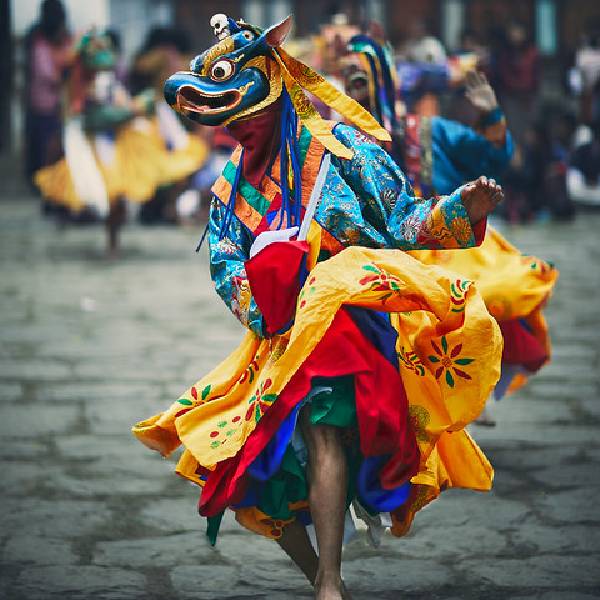
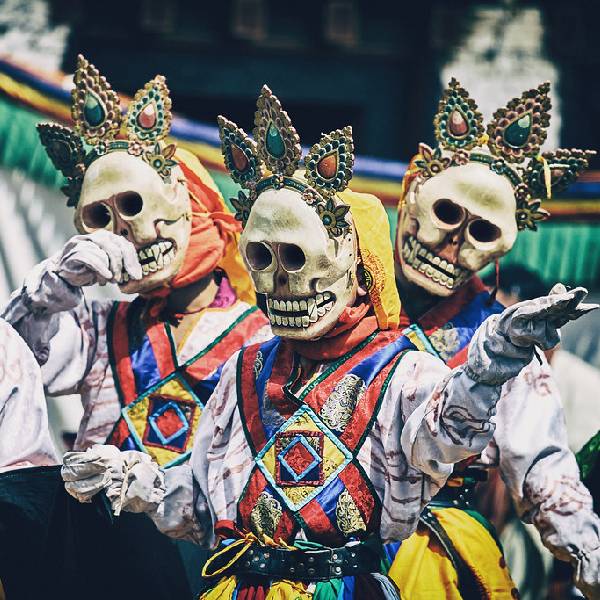
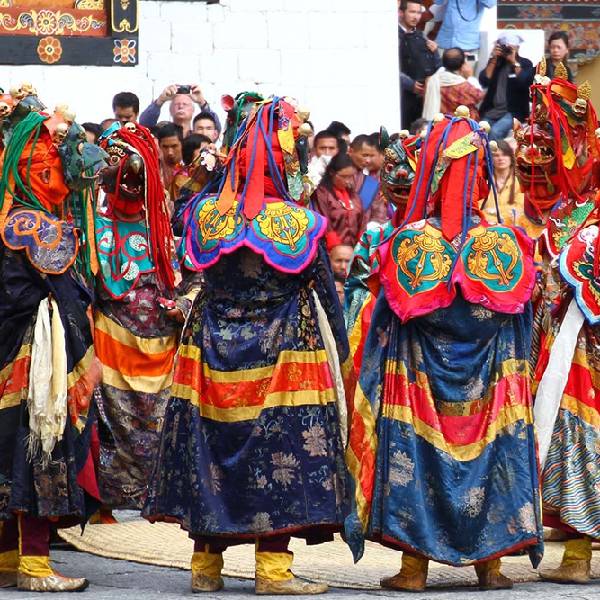
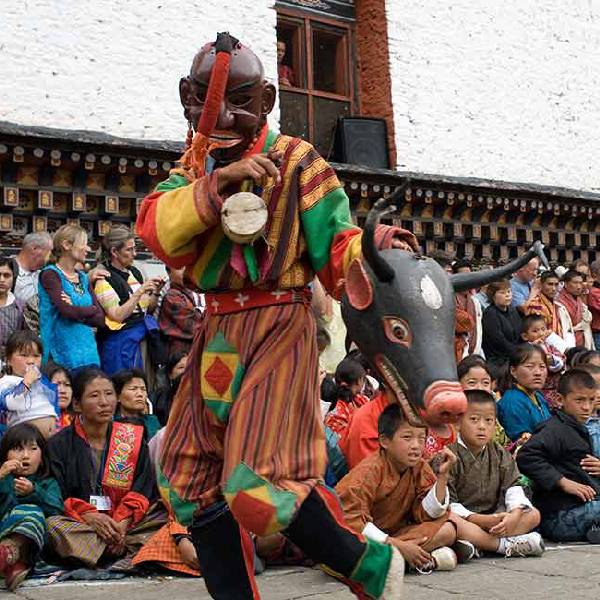
As with Bhutanese tshechus elsewhere, sacred masked dances, or cham, form an important part of the programme. Performers wear elaborate robes and symbolic masks while ritual music from drums, cymbals, and horns fills the courtyard. Tshechus occupy an important place in Bhutanese Buddhist culture, and the word itself refers to the auspicious tenth day associated with Guru Rinpoche in the lunar calendar.
Yet Gasa Tshechu is memorable not simply because of cham. One of its most distinctive cultural features is Goen Zhey, a classical dance carrying strong religious and historical significance. The official Gasa festival programme describes it as being performed by a group of 21 men from Goen Gewog, Khatoed, and Khamaed. The performance gives the festival a local identity that visitors will not necessarily encounter at larger tshechus in Paro or Thimphu.
The participation of the Layap community adds another important dimension. Women from Laya perform highland songs and folk dances while wearing traditional clothing associated with their mountain homeland. Their music, dress, and performance style reflect a culture shaped by life in Bhutan’s northern highlands. Gasa’s district administration specifically highlights these Layap performances as one of the major attractions of the annual festival.
This connection with the highlands is especially significant because Gasa includes both Laya and Lunana, two of Bhutan’s best-known remote mountain communities. Across the district, traditions have developed in close relationship with livestock, mountain routes, seasonal movement, agriculture, and the demanding Himalayan environment. The festival provides a rare occasion when these local identities can be seen within the same ceremonial setting.
For local residents, Gasa Tshechu is also an important social gathering. Families attend religious ceremonies, meet friends and relatives, watch performances, and spend time together around the dzong. Many arrive wearing formal gho and kira, turning the courtyard into a colourful display of Bhutanese textiles, jewellery, and regional dress. The occasion combines worship with the simple pleasure of communities gathering after long periods spent in widely separated settlements.
Travelers who attend can therefore experience something different from a large tourism-focused festival. The smaller population and remote mountain setting allow local participation to remain highly visible. Monks, village families, highlanders, dancers, musicians, and elderly devotees share the same festival space, making Gasa Tshechu feel closely connected with everyday community life rather than staged separately from it.
A journey to Gasa can also be combined with other experiences in the district. The region is known for its Gasa Tshachu, or hot springs, located near the Mo Chhu River. The district administration describes these springs as among Bhutan’s popular traditional hot-spring destinations. Visitors spending additional time in Gasa can therefore experience both the festival and the mountain landscape surrounding the district.
Festival visitors should arrive early and remain flexible because ceremonial schedules may change according to religious requirements. Photography can be rewarding, particularly during the masked dances and highland performances, but sacred activities should never be interrupted for a photograph. Visitors should keep out of performance areas, follow monastery and dzong rules, and ask before taking close portraits of individual participants.
Late March in high-altitude Gasa can also feel considerably cooler than Bhutan’s lower valleys. Warm layers, comfortable footwear, and practical clothing for changing mountain conditions are useful when spending several hours around the festival grounds. Travel time should also be planned carefully because Gasa remains one of Bhutan’s more remote districts.
Gasa Tshechu stands out because the festival carries the personality of the district itself. Sacred cham dances appear alongside the rare Goen Zhey, Layap women bring highland songs and distinctive clothing to the courtyard, and families from mountain communities gather beneath Gasa’s dramatic Himalayan landscape. For visitors interested in experiencing Bhutanese festival culture beyond its best-known western celebrations, Gasa offers a rich combination of Buddhist devotion, regional identity, performance, and living highland heritage.
Important page update: your current page still lists 5–7 April 2025. For 2026, use 25–28 March 2026 at Gasa Dzong. An earlier tentative 2026 festival calendar showed 26–28 March, but the official Gasa Dzongkhag event notice was updated on 24 March 2026 and gives the final four-day schedule as 25–28 March, so that is the stronger date to use.