Gomphu Kora
Gomphu Kora Festival, also called Gom Kora Tshechu, is one of eastern Bhutan’s best-known pilgrimage gatherings. Held at the sacred Gomphu Kora site in Trashiyangtse, the celebration draws devotees from nearby valleys and communities across eastern Bhutan for three days of worship, religious activity, traditional dress, social gatherings, and circumambulation. The site lies about 23 kilometres from Trashigang Dzong, making it accessible from Trashigang while still belonging administratively to Trashiyangtse. In 2026, the festival was celebrated from 26 to 28 March.
The meaning of the name helps explain the character of the place. Gomphu refers to a meditation cave, while kora means the ritual act of walking around a sacred object or place. At Gomphu Kora, a natural cave and rocky formation stand beside the temple and form the spiritual heart of the site. Pilgrims circle the temple and sacred rock while reciting prayers, reflecting, and seeking religious merit. The Trashiyangtse Dzongkhag Administration identifies circumambulation as the central practice associated with the festival.
Local religious tradition links Gomphu Kora with Guru Rinpoche, or Padmasambhava, whose journeys are deeply woven into Bhutan’s Buddhist landscape. Traditional accounts say that Guru Rinpoche meditated at the site and subdued a harmful spirit that had taken refuge within the rock. Impressions and features on the rock are interpreted through stories connected with his presence, giving the landscape itself religious meaning rather than making the temple the only focus of devotion.
During ordinary days, Gomphu Kora is a comparatively quiet pilgrimage site surrounded by the agricultural landscape of eastern Bhutan. The annual festival changes that atmosphere considerably. Families arrive dressed in their best clothes, monks conduct religious activities, vendors and community members gather around the area, and pilgrims move steadily around the sacred site. The government description notes that the three-day celebration attracts devotees from across eastern Bhutan who come to worship and reconnect with their religious heritage.
The kora itself remains the defining experience. Rather than attending only as spectators, many visitors participate by walking clockwise around the sacred temple and rock. Prayer beads may be carried, mantras recited, and moments of quiet reflection taken along the route. For devotees, the physical act of walking becomes part of religious practice. This distinguishes Gomphu Kora from festivals where the main emphasis falls on watching a formal programme of performances.
The gathering also has a remarkable cross-border dimension. Official information from Trashiyangtse notes that members of the Dakpa community from Arunachal Pradesh in India have traditionally travelled to Gomphu Kora for the festival, sometimes making demanding journeys with their families. Their participation gives the event importance beyond a single Bhutanese district and reflects older cultural and religious connections across the eastern Himalayan region.
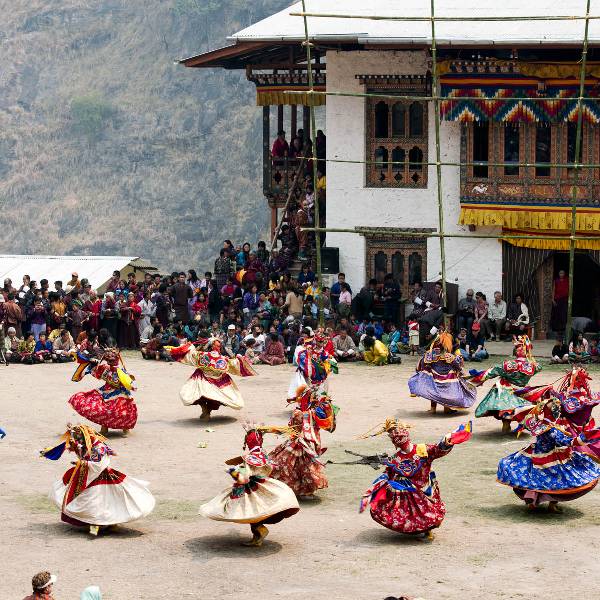
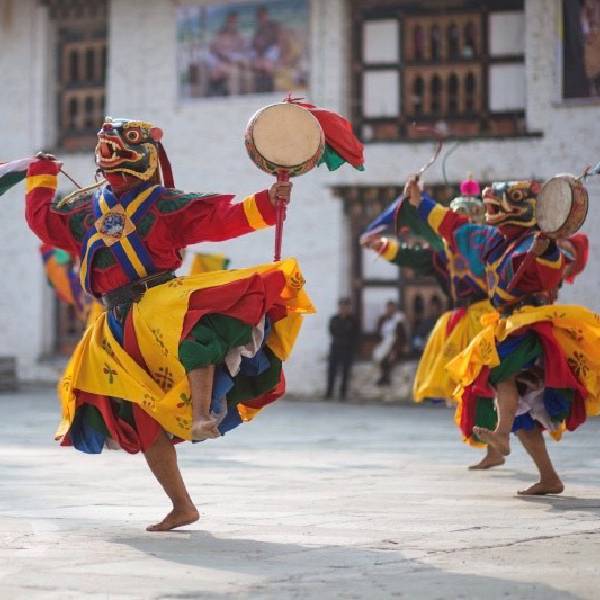
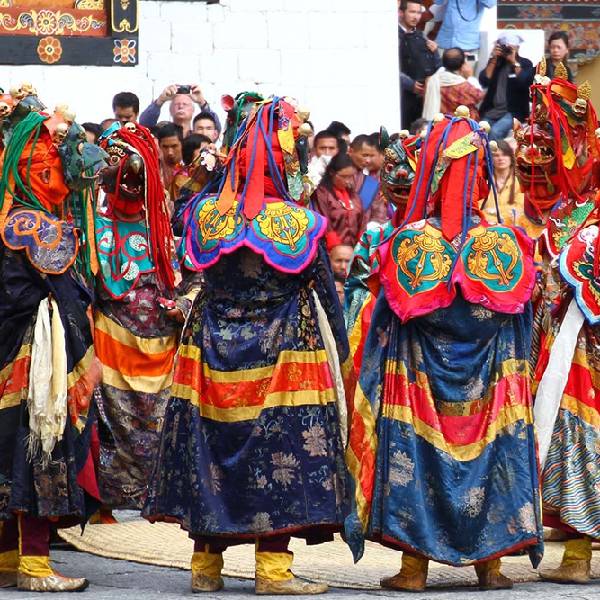
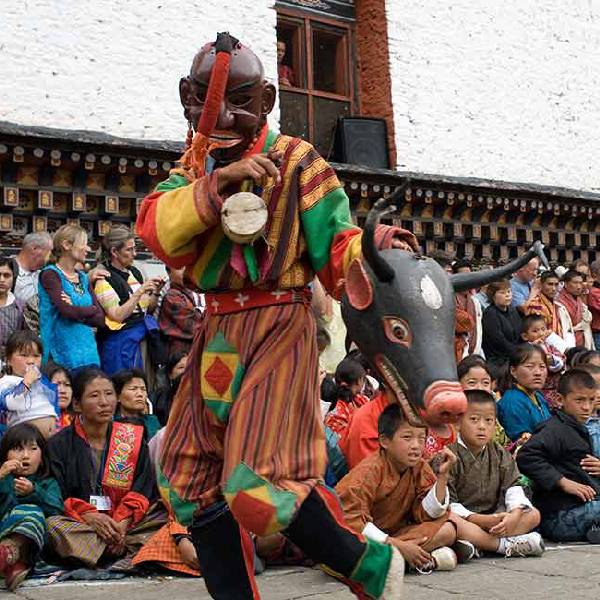
Sacred dances and traditional performances can add a more colourful side to the occasion. Masked dancers wearing elaborate costumes appear during festival programmes, accompanied by ritual music and groups of spectators gathered around the performance area. These dances belong to Bhutan’s wider Buddhist festival tradition, where costume, movement, religious symbolism, and community participation are closely connected.
The festival also acts as a major social gathering. People who live in different settlements have an opportunity to meet relatives, friends, and acquaintances while spending time around the sacred site. Traditional clothing, shared food, conversations, prayer, and religious activity take place side by side. This mixture of pilgrimage and reunion gives Gomphu Kora an atmosphere that is devotional without being entirely solemn.
For travelers, the festival provides an excellent reason to explore eastern Bhutan, a region visited less frequently than Paro, Thimphu, or Punakha. The journey through Trashigang and Trashiyangtse introduces visitors to mountain roads, cultivated valleys, traditional settlements, temples, and a cultural landscape with its own character. Attending Gomphu Kora adds a living religious dimension to that journey rather than limiting the experience to sightseeing.
Visitors should remember that circumambulation routes and temple spaces remain active places of worship. Walking should follow the direction and behaviour of local devotees, and travelers should avoid interrupting people who are praying. Photography around performances may be possible, but temple interiors can have restrictions, and close portraits of monks or pilgrims should be taken only with permission.
Spring weather in eastern Bhutan can vary, so comfortable footwear and light layers are practical. Travelers planning specifically around the festival should also reconfirm dates and daily programmes before departure because Bhutanese festival schedules follow the lunar calendar and published dates can occasionally change.
At its heart, Gomphu Kora Festival in Bhutan is about pilgrimage rather than spectacle. A sacred cave, an ancient religious story, repeated circumambulation, prayers, community reunions, and visitors arriving from across eastern Bhutan all come together for three concentrated days. For travelers interested in experiencing Bhutanese Buddhism within a smaller and deeply rooted local setting, Gomphu Kora offers a memorable encounter with faith that remains connected to landscape, movement, and community life.
Important page update: the existing page still gives the 2025 dates of 5–7 April. For the 2026 version, update this to 26–28 March 2026. Also, describing the site simply as “near Trashigang” is understandable geographically, but the more accurate location is Gomphu Kora, Trashiyangtse, about 23 km from Trashigang Dzong.