Haa Summer Festival
The Haa Summer Festival offers visitors a closer look at the everyday traditions of one of western Bhutan’s most distinctive mountain valleys. Rather than following the format of a conventional religious tshechu, the event focuses strongly on local lifestyles, highland culture, food, traditional sports, crafts, music, and the relationship between people and the surrounding landscape. Families, farmers, herders, performers, artisans, and visitors gather in Haa for a festival that places community life at the centre of the experience. Several current 2026 festival schedules list the celebration from 19 to 21 September at Chorten Karpo in Haa Valley, although published dates remain tentative and should be reconfirmed before travel.
The festival is relatively young compared with Bhutan’s centuries-old monastery celebrations. It was introduced in 2011 by the former Tourism Council of Bhutan as a way to present Haa’s culture to a wider audience while encouraging community participation in tourism. Earlier editions were commonly organised in July and were sometimes described as a monsoon festival. The programme developed around traditions already present in the valley rather than creating an entirely separate spectacle for visitors.
One of its strongest themes is the highland and herding lifestyle associated with Haa. Displays and activities may introduce visitors to yak herders, livestock traditions, rural skills, locally made products, and practices shaped by life in Bhutan’s mountain environment. Haa’s communities have historically depended on agriculture and livestock, and the festival gives these everyday livelihoods a visible place within the cultural programme.
Traditional sports add a lively character to the gathering. Archery, Bhutan’s national sport, is frequently associated with the event, while earlier Haa Summer Festivals have also included local games such as pillow fights and competitions involving traditional swings. These activities often attract enthusiastic spectators because participation, humour, skill, and friendly rivalry all become part of the atmosphere.
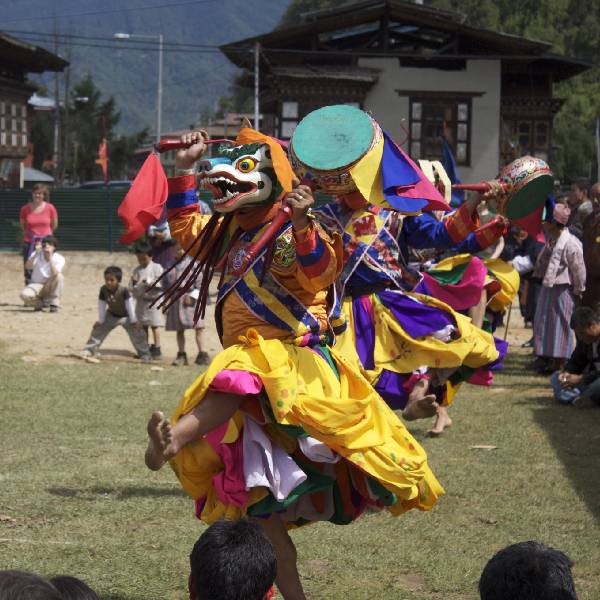
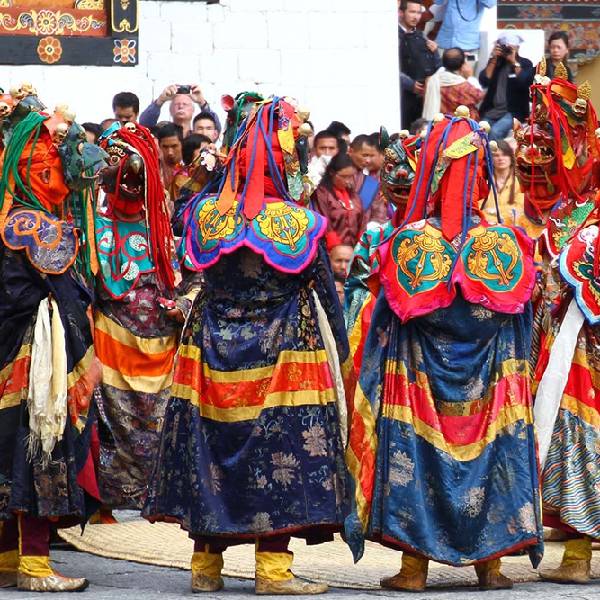
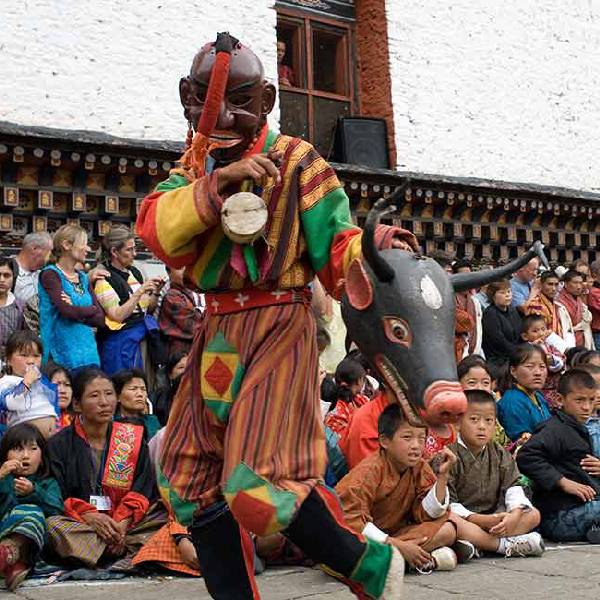
Music and dance provide another window into local identity. Groups dressed in Bhutanese clothing perform songs and folk dances, while religious or masked performances may also appear within the programme. Unlike a major tshechu, however, the entire festival is not organised around cham dances. The emphasis is broader, allowing cultural performances to sit alongside food, games, crafts, farming traditions, and community interaction.
Food is one of the best ways to understand the festival. Temporary stalls and local households introduce visitors to dishes associated with Haa and Bhutanese mountain cuisine. Previous editions have featured buckwheat dumplings, buckwheat noodles, homemade dishes, dairy products, and local ara, a traditional alcoholic drink. Ingredients reflect what families can grow, produce, or preserve in a high-altitude agricultural environment.
Sampling these foods is more than a break between performances. Recipes carry family knowledge and regional identity, and many are less commonly encountered in standard hotel menus. Sitting down to something prepared locally can therefore provide a more personal understanding of Haa than simply watching a stage programme.
The festival also creates space for traditional crafts and locally produced goods. Visitors may encounter textiles, household items, agricultural products, handicrafts, and displays connected with rural occupations. Such participation provides an opportunity for residents to benefit economically while presenting skills that remain part of everyday valley life. The original purpose of the festival included supporting community tourism and encouraging local people to develop activities connected with Haa’s culture and natural environment.
Haa itself gives the event much of its appeal. Surrounded by forested mountains and open highland scenery, the valley feels noticeably different from Bhutan’s busier centres. Traditional farmhouses, agricultural land, temples, prayer flags, livestock, and small settlements remain visible throughout the landscape. A festival held in this setting naturally feels connected with place rather than separated from it.
Travelers often combine the journey to Haa with the route through Chele La, the mountain pass connecting the Haa and Paro sides of western Bhutan. The road provides broad mountain scenery before descending toward the valley. Spending additional time in Haa rather than visiting only for the festival can also make it easier to experience local villages, temples, rural walks, and traditional architecture.
Community-based accommodation has also played a role in Haa’s tourism development. Homestays allow visitors to experience household hospitality, local meals, and rural routines at a closer level than a conventional sightseeing visit. Earlier festival initiatives specifically promoted homestays and local guides as ways for tourism income to remain within the valley.
Visitors attending the festival should remember that local residents are sharing aspects of their own lives rather than simply performing for cameras. Asking before taking close portraits, respecting livestock and private spaces, and avoiding interruption during religious activities are simple ways to participate responsibly.
Weather also deserves attention. Haa is a high mountain valley, and conditions can change quickly. Comfortable footwear, warm layers, rain protection, and sun protection are useful even when daytime conditions initially appear pleasant. Travelers should also allow some flexibility because outdoor programmes can be affected by local weather.
What makes the Haa Summer Festival in Bhutan memorable is its emphasis on ordinary cultural life. Archers compete, cooks prepare familiar regional dishes, herders share aspects of highland tradition, musicians perform, families meet, and visitors experience a valley through the people who live there. Instead of presenting Bhutanese culture only through monuments or formal ceremonies, the festival creates a space where food, landscape, rural livelihoods, music, sport, and hospitality can all be experienced together.
For travelers seeking a smaller cultural gathering away from Bhutan’s most crowded festival venues, Haa offers a particularly engaging setting. The celebration reveals how tourism can become an opportunity for a community to present its traditions on its own ground while keeping the character of the valley firmly at the centre.