Lhuentse Annual Tshechu
Lhuentse Annual Tshechu is one of eastern Bhutan’s important religious festivals, bringing monks, local families, performers, and pilgrims together at the historic Lhuentse Dzong. The celebration combines sacred masked dances, Buddhist rituals, traditional music, colourful national dress, prayer, and community gatherings. For 2026, published Bhutan festival calendars list the festival from 17 to 21 December 2026, with the concluding day traditionally associated with a sacred thongdrol display.
Lhuentse Dzong provides an impressive setting for the celebration. The fortress stands high above the Kurichhu River and continues to serve both administrative and religious functions. The official Lhuentse Dzongkhag Administration identifies the dzong as the venue for the district’s festival and notes that it houses important sacred objects and relics.
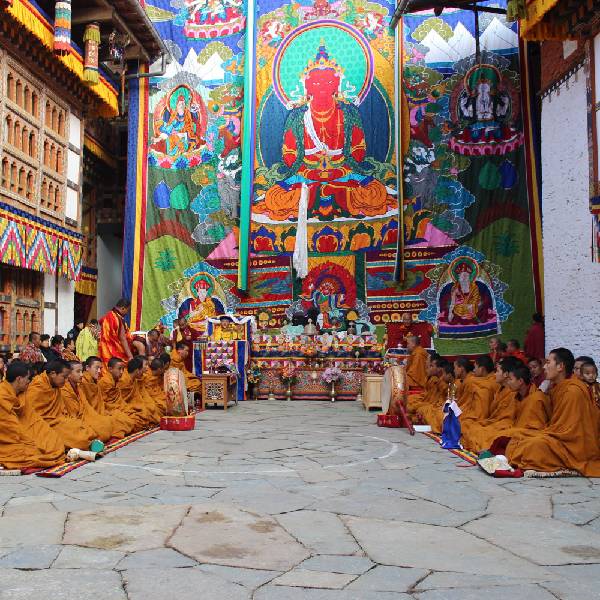
During the tshechu, the dzong courtyard changes from a normally peaceful religious space into the centre of several days of ceremonies. Families travel from different parts of Lhuentse to attend prayers, watch performances, receive blessings, and spend time with relatives and neighbours. The gathering is therefore as much about maintaining community connections as it is about observing formal Buddhist rituals.
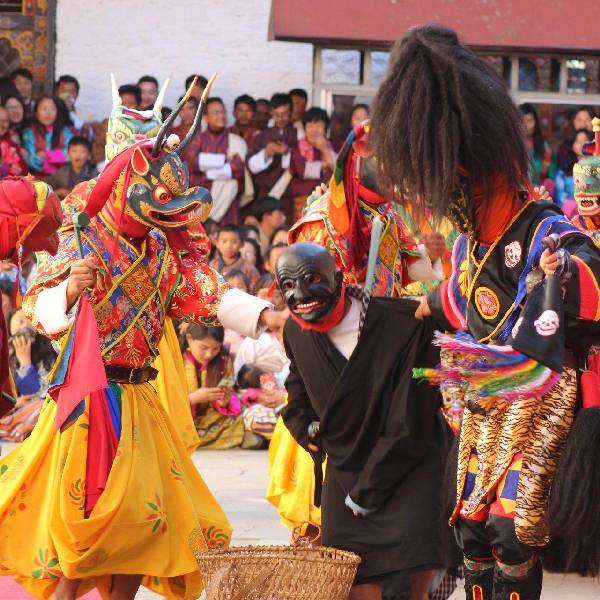
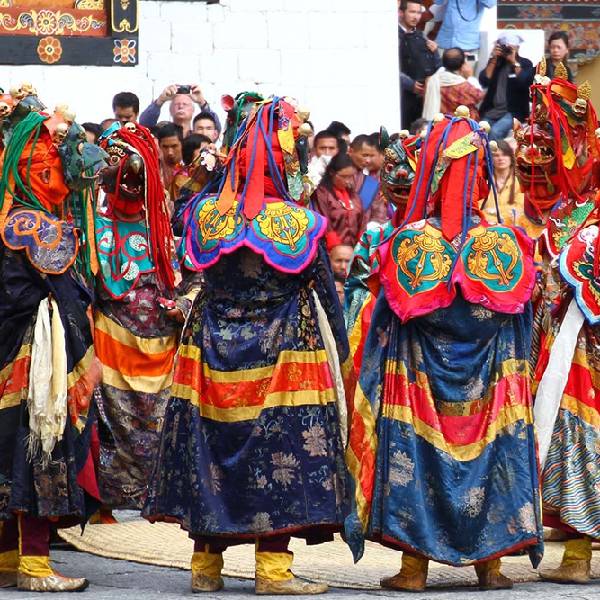
The most visually striking part of Lhuentse Tshechu is the series of sacred masked dances known as cham. Monks and trained performers appear in elaborate masks and richly decorated robes while drums, cymbals, horns, and ritual music accompany their movements. Historical descriptions of the festival identify dances such as Sachhog Zhang Cham, Sha Zam Cham, and Daegye Bakchan among performances associated with the annual programme.
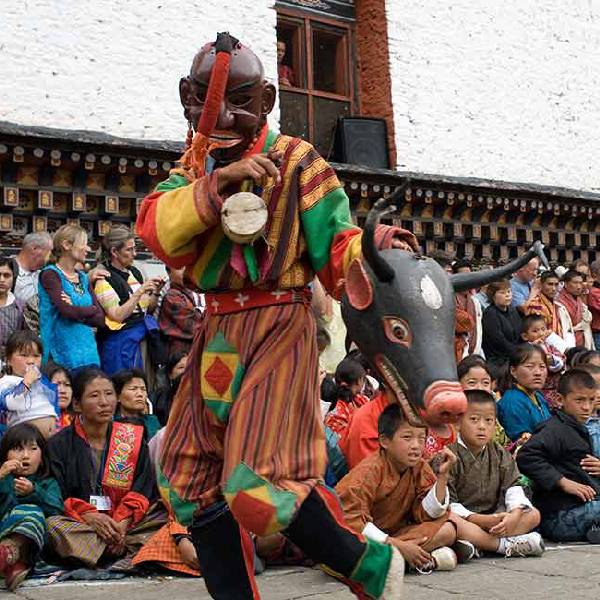
These dances are not simply cultural entertainment. Within Bhutanese Vajrayana Buddhism, cham communicates religious teachings through movement, symbolism, costume, and music. Different characters may represent protective deities, spiritual beings, animals, or figures connected with Buddhist narratives. For devotees, watching the dances is associated with spiritual reflection, blessings, and the accumulation of merit.
Traditional folk dances and songs add a different rhythm to the sacred performances. Local men and women wear formal gho and kira, while many families bring food and spend much of the day around the festival grounds. Children attend alongside parents and grandparents, allowing festival customs, religious etiquette, traditional clothing, music, and community responsibilities to pass naturally between generations.
One of the most meaningful moments comes toward the end of the festival with the display of a thongdrol, a large sacred religious textile. Current 2026 festival schedules specifically note the thongdrol on the final day of Lhuentse Tshechu. Devotees may arrive early to receive its blessing before the textile is carefully rolled away again.
Lhuentse itself gives the festival a distinctive character. Located in northeastern Bhutan, the district is more remote than major tourism centres such as Paro and Thimphu. Its mountain landscapes, agricultural communities, temples, traditional settlements, and strong religious heritage create a setting where the festival feels closely tied to local life rather than organised mainly for visitors.
The region also contains numerous smaller local festivals and sacred sites. Official district records document an extensive calendar of village tshechus, religious ceremonies, pilgrimage places, and community traditions throughout Lhuentse. This wider religious landscape helps explain why the annual district tshechu remains such an important occasion for surrounding communities.
For travelers, attending Lhuentse Annual Tshechu offers a noticeably different experience from Bhutan’s largest festivals. The longer journey into eastern Bhutan brings visitors closer to rural communities, traditional landscapes, and religious sites that receive fewer international travellers. The festival itself provides an opportunity to observe how Bhutanese families participate in a major annual religious gathering rather than seeing sacred dances only as performances.
Photography can be rewarding because of the masked dancers, musicians, traditional clothing, architecture, and mountain setting. However, visitors should keep clear of areas reserved for monks and performers and avoid blocking worshippers. Photography inside sacred rooms may be restricted, and permission should be requested before taking close portraits.
December can also be cold in eastern Bhutan, particularly early in the morning and after sunset. Warm layers, comfortable footwear, and sufficient time for road travel are advisable. Since Bhutanese religious schedules can occasionally change, visitors travelling specifically for the festival should reconfirm the programme before departure.
At its heart, Lhuentse Annual Tshechu in Bhutan is a celebration of faith, cultural continuity, and community identity. Sacred dances, Buddhist prayers, traditional music, family gatherings, and the final thongdrol ceremony come together within the historic walls of Lhuentse Dzong. For travelers looking beyond Bhutan’s most visited festival destinations, Lhuentse offers a meaningful opportunity to experience the living Buddhist traditions of the country’s eastern mountains.