- Home
- Khangma Tshechu
Khangma Tshechu
Khangma Tshechu is a traditional Buddhist festival celebrated at Khangma Lhakhang in Yurung Gewog, Pemagatshel, in eastern Bhutan. Smaller and more community-focused than the famous tshechus of Paro or Thimphu, the festival offers visitors an opportunity to experience Bhutanese religious culture in a rural setting where local families remain closely involved in maintaining annual traditions. The existing festival page identifies masked dances, religious rituals, and cultural performances as the main elements of Khangma Tshechu.
Khangma is one of the five chiwogs of Yurung Gewog in Pemagatshel Dzongkhag. The area lies among broadleaf forests, agricultural land, scattered villages, temples, and chortens. Official district information records numerous religious structures within Khangma, reflecting how closely Buddhist practice remains connected with everyday community life in this part of eastern Bhutan.
During the tshechu, Khangma Lhakhang becomes the centre of activity. Families from nearby settlements gather around the temple to attend prayers, watch ritual performances, meet relatives, and spend time together. Instead of functioning only as a religious ceremony, the festival becomes a yearly occasion when people reconnect with both their spiritual traditions and their wider community.
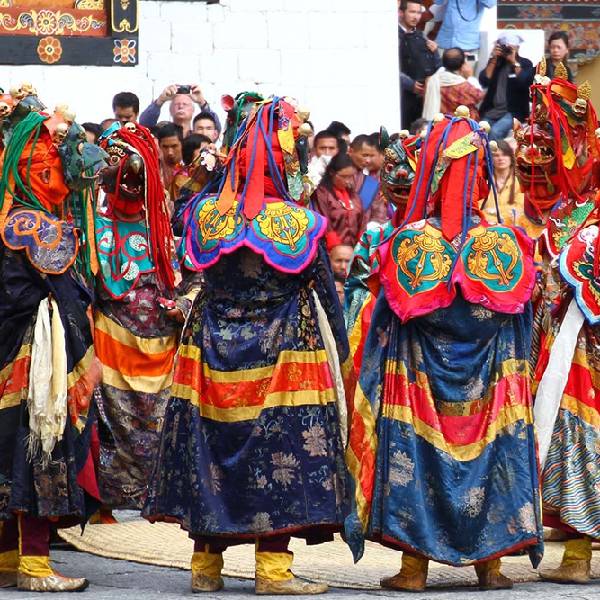
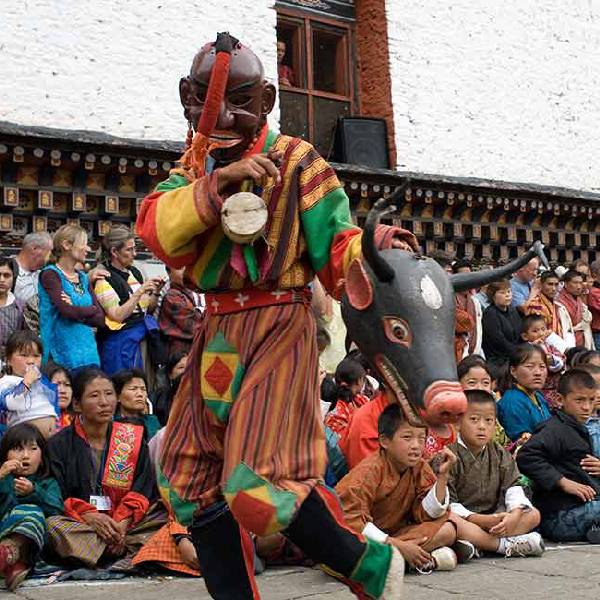
One of the most recognisable features is cham, Bhutan's sacred masked dance tradition. Performers wear elaborate robes and symbolic masks while moving to the rhythm of drums, cymbals, horns, and other ritual instruments. Historical Bhutan festival documentation specifically identifies masked dances and traditional cultural programmes as important parts of Khangma Tshechu.
These dances are more than colourful entertainment. In Bhutanese Buddhist tradition, cham can communicate religious teachings through movement, costume, characters, and symbolism. Different performances may reflect ideas connected with spiritual protection, moral responsibility, compassion, impermanence, or the overcoming of harmful influences. Watching the dances therefore carries religious importance for many local devotees.
Traditional songs and cultural performances add another dimension to the gathering. Local men and women may appear in formal Bhutanese dress, while families arrive wearing their best gho and kira. The combination of ceremonial dance, traditional clothing, music, conversation, and prayer gives the festival a warm village atmosphere rather than the feeling of a large organised tourist event.
For local families, attending the tshechu is also a way of passing traditions between generations. Children observe how elders behave around the temple, how offerings are made, when prayers are performed, and how sacred dances are treated. Cultural knowledge continues through participation rather than being separated from everyday life.
This community character is one of the strongest reasons for visiting Khangma Tshechu. Bhutan's largest festivals can attract substantial visitor numbers, but smaller regional celebrations allow travelers to observe the relationship between a temple and the people who worship there throughout the year. At Khangma, the festival belongs first to the surrounding communities.
The wider Pemagatshel region also adds interest to the journey. The district administration describes Pemagatshel as an area with a rich cultural heritage, while Yurung itself contains agricultural communities, religious monuments, and forested landscapes. Khangma Chorten, also known as Samdruptse Stupa, is another locally significant religious site associated with the area.
Travelers should approach the festival respectfully. Temple areas may have restrictions on photography, and religious objects should never be touched without permission. Visitors should avoid entering spaces reserved for monks or performers and should leave clear pathways for people making offerings or participating in ceremonies.
Photography of the outdoor dances may be possible, but close portraits of monks, elderly devotees, children, or individual residents are better taken only after asking permission. The festival remains an active religious gathering rather than a performance created specifically for visitors.
Because Khangma is located away from Bhutan's major tourism centres, travelers should also allow enough time for road journeys and local arrangements. Rural travel in eastern Bhutan can be slower than journeys around Paro and Thimphu, but this is also part of the experience. The landscape, villages, agricultural areas, and smaller religious sites provide a different perspective on the country.
At its heart, Khangma Tshechu in Bhutan is a celebration of continuity. Sacred masked dances, Buddhist prayer, traditional music, formal dress, family gatherings, and an old community temple come together to keep local religious traditions alive. For travelers interested in experiencing Bhutan beyond its most famous festivals, Khangma Tshechu offers a quieter and more personal introduction to the Buddhist and community life of eastern Bhutan.
Important date note: I would not add a fixed 2026 date yet. Current online festival lists conflict—some publish 23–25 June, while others show 26–28 November for Khangma Lhakhang. I could not find a reliable 2026 confirmation from the Pemagatshel Dzongkhag Administration, so the safest page wording is “dates follow the Bhutanese lunar calendar and should be reconfirmed before travel.”