Lhaboe
Lhaboe, also written as Lha-boe or Lhaboen, is a traditional community festival preserved in parts of Bhutan, particularly in Trongsa. Unlike the large tshechus held at major dzongs and monasteries, Lhaboe grows from local beliefs, village relationships, and inherited ritual responsibilities. Communities gather to honour their protective deities, express gratitude for past protection, and pray for peace, good health, successful crops, livestock well-being, and prosperity. The tradition is especially associated with villages including Taktse and Uesa in Drakten Gewog.
The name itself helps explain the celebration. Bhutan's intangible cultural heritage documentation describes Lha as referring to a deity or god and boen as relating to Bon. During the festival, villagers perform ceremonies intended to invite their local protective deities into the community. Traditional accounts from Trongsa identify deities including Yueltsen Dorji Draktsen, Menmo Trashi Wangzom, and Lhachen Wodhey Gungyel.
The celebration traditionally lasts three days. Its purpose is not simply to organise a public performance but to renew the relationship between the community and the spiritual guardians believed to protect the surrounding land, people, livestock, and crops. Bhutan's cultural heritage archive describes Lhaboe as an annual gathering where residents pray for harmony, good fortune, and the fulfilment of community wishes.
One of the most striking parts of the festival occurs when villagers symbolically welcome the local deity into the settlement. During a major Lhaboe celebration reported in Trongsa in January 2025, participants began walking toward a hilltop at around five in the morning. After several hours of hiking and ritual activity, the deity was ceremonially invited back toward the village in a long procession.
A temporary sacred structure known as a Lhachim may be prepared to receive the deities. The main ritual responsibilities traditionally involve a local spiritual practitioner, or phajo, together with senior members of the community. Offerings, prayers, ritual actions, and expressions of gratitude form an important part of the occasion.
Lhaboe also preserves an interesting three-year ceremonial cycle in some communities. Although the festival itself is held annually, a larger observance takes place every third year when the local deity is formally invited into the village. Uesa and Taktse traditionally take turns hosting this expanded celebration. During the 2025 cycle, Uesa hosted the ceremony and welcomed the local deity Dorji Dramtsen.
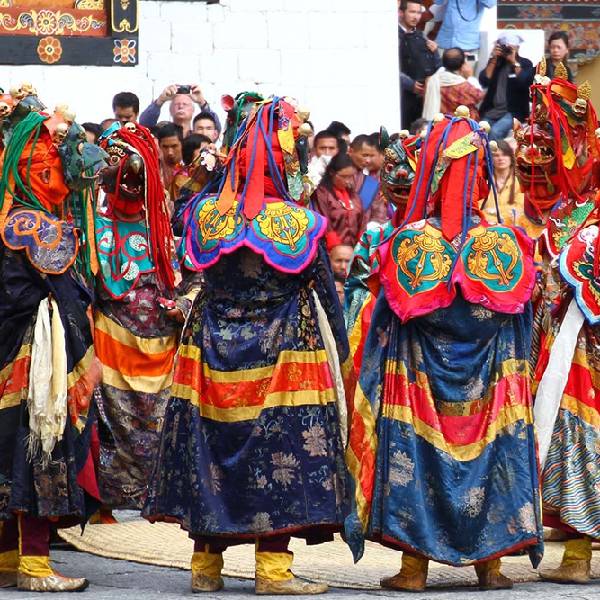
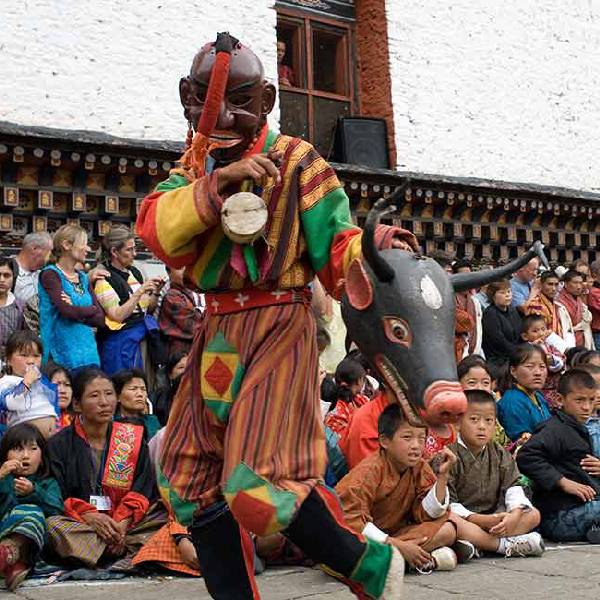
Religious ceremonies are accompanied by lively community traditions. Masked dances, theatrical presentations, and character performances can form part of the programme. Local participants may take roles representing figures such as Zimpoen, Dronyer, Dasho, or Dapoen, combining inherited social imagery with music, movement, humour, and public participation.
Women, children, elders, and other villagers also join the celebration, helping create an event that belongs to the entire community rather than only religious specialists. The gathering offers younger generations an opportunity to observe customs directly and understand the responsibilities connected with their village heritage. Bhutan's cultural heritage record specifically notes that women dance while children and other community members participate in and enjoy the occasion.
The third day includes one of Lhaboe's most social traditions. In Trongsa it is known as Changshay, when residents move from house to house and share traditional drinks. The custom has been passed through generations in Uesa and Taktse and turns the final part of the festival into a neighbourhood-wide gathering.
Food, drink, conversation, ritual, and performance therefore exist together throughout Lhaboe. Families who have moved elsewhere may return to their home communities specifically for the festival. Local residents interviewed by Bhutan Broadcasting Service described the occasion as something people make an effort to attend every year, particularly during the more elaborate three-year celebration.
Traditional beliefs also help explain why maintaining the festival remains important. Community accounts recall periods when failing to observe Lhaboe was associated with misfortune. The annual ceremony is therefore understood as a way of maintaining harmony with protective deities while asking for continued peace and prosperity.
For travelers, Lhaboe provides a very different experience from Bhutan's famous festival circuit. It is smaller, strongly community-based, and closely connected with a specific landscape and group of villages. Visitors may encounter early-morning processions, local ritual specialists, traditional costumes, community dances, family gatherings, and ceremonies that are rarely experienced at Bhutan's more internationally known tshechus.
Respect is especially important because Lhaboe belongs first to the people who maintain it. Visitors should avoid interrupting rituals, entering sacred spaces without permission, touching offerings, or blocking procession routes. Close photography of residents and religious ceremonies should always be approached carefully and preferably with permission.
There is also no reliable nationwide 2026 date for Lhaboe. The festival follows local community traditions rather than appearing as one standard national event. Travelers wishing to attend should confirm the timing directly for the relevant village in Trongsa before arranging their journey.
At its heart, Lhaboe in Bhutan is about maintaining a relationship between people, place, and protective deities. Through pilgrimage, offerings, village processions, dance, shared food, prayer, and family participation, communities renew customs passed down through generations. For visitors interested in Bhutan beyond its major dzongs and famous tshechus, Lhaboe offers a rare look at the intimate village traditions that continue to shape the country's living cultural heritage.