Lhamoi Doey Phang
Lhamoi Doey Phang is a distinctive religious observance held at Rinpung Dzong in Paro, one of Bhutan’s most important historic and monastic centres. Unlike the country’s larger multi-day tshechus, this occasion is more closely focused on ritual worship performed by the monks of the Rinpung Rabdey for their local deity and spiritual protector. The gathering reflects a quieter side of Bhutanese festival culture, where prayer, sacred performance, protection rituals, and monastic tradition take priority over large public celebration.
Rinpung Dzong provides a powerful setting for the event. Standing above the Paro Valley, the fortress-monastery has long served both religious and administrative functions. During Lhamoi Doey Phang, the dzong becomes the centre of ceremonies connected with the protective deity traditionally honoured by the local monastic community.
The festival is performed annually by Rinpung Rabdey monks. Historical Bhutan festival documentation describes Lhamoi Doey Phang specifically as a ritual for their local deity and protector. This is an important distinction because the event should not simply be described as another general Bhutanese tshechu with standard masked dances and cultural entertainment. Its main identity lies in devotional and protective Buddhist practice.
Within Bhutanese Vajrayana Buddhism, protective deities occupy an important place in religious life. Ceremonies dedicated to them may involve prayers, mantra recitation, ritual instruments, offerings, and symbolic practices intended to remove obstacles and create favourable conditions. Such rituals can be performed for the well-being of monasteries, communities, individuals, and the surrounding region.
The atmosphere of Lhamoi Doey Phang is therefore likely to feel more solemn than that of Bhutan’s largest festival gatherings. Monks carry out their assigned religious duties while local devotees may attend to pray, make offerings, and seek blessings. Drums, cymbals, horns, chanting, incense, and carefully prepared ritual objects can contribute to the sacred environment.
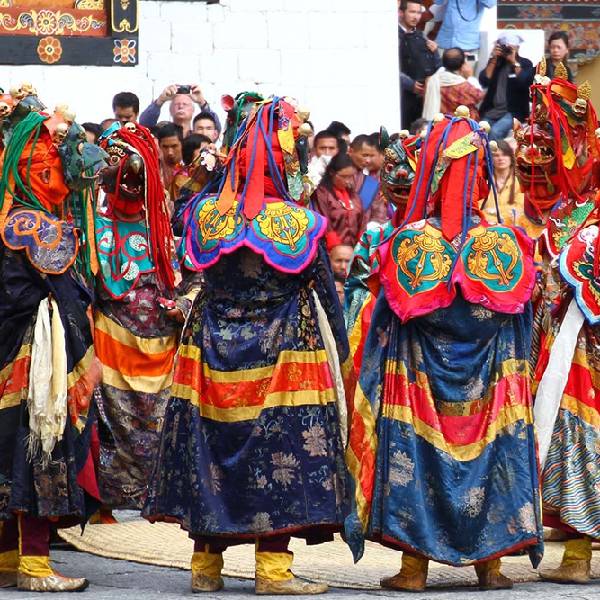
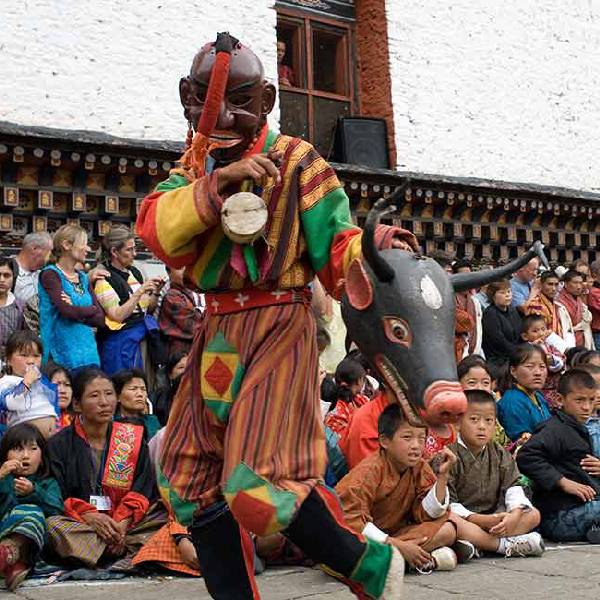
Masked or ceremonial performances may also form part of the wider observance, depending on the annual programme. In Bhutanese religious tradition, such performances are not presented purely for entertainment. Costume, movement, masks, music, and ritual symbolism are used to communicate spiritual ideas and strengthen the purpose of the ceremony.
For local people, the occasion also reinforces the relationship between the monastery and the community. Religious festivals provide opportunities for families to visit sacred places, offer prayers, meet relatives, and participate in traditions followed by earlier generations. Even when an event is relatively small, its importance can be considerable for the people who maintain it.
The location in Paro makes Lhamoi Doey Phang particularly interesting for travelers. Many visitors already know Paro for Tiger’s Nest Monastery, Paro Tshechu, traditional farmhouses, and the broad valley surrounding the town. Experiencing a smaller monastic ritual at Rinpung Dzong reveals another side of the region’s Buddhist heritage—one that is less focused on spectacle and more closely tied to local religious responsibilities.
Visitors should approach the ceremony with respect. Rinpung Dzong remains an active religious site, and areas may be reserved for monks or devotees. Photography inside sacred spaces can be restricted, while ritual objects should never be touched without permission. Travelers should avoid interrupting prayer, standing between monks and ceremonial areas, or moving into spaces designated for religious participants.
Close photographs of monks, elderly devotees, or people making offerings are best taken only after permission. Even when ceremonial performances are visible, visitors should remember that the participants are conducting religious duties rather than staging a show specifically for tourists.
Travelers should also allow flexibility in their schedule. Smaller Bhutanese religious events do not always follow the detailed public timetables associated with major festivals. The timing of rituals can depend on monastic requirements, and certain ceremonies may take place at particular hours of the day.
The 2026 date requires caution. Journey DMC’s current festival listing shows 15 August 2026, while several older or mixed festival calendars publish different Gregorian dates, including 27 July in earlier schedules. Because I could not find a current 2026 confirmation from an official Paro or Bhutan tourism authority, the safest wording for the page is to state that the festival follows the Bhutanese religious calendar and that the exact date should be reconfirmed before travel.
At its heart, Lhamoi Doey Phang in Bhutan is a festival of spiritual protection and continuity. Monks of Rinpung Rabdey gather to honour their local protective deity through rituals rooted in Vajrayana Buddhist tradition, while Paro’s historic dzong provides the sacred setting. For travelers interested in experiencing Bhutan beyond its famous large-scale tshechus, Lhamoi Doey Phang offers a more intimate look at the monastic practices that continue to shape the country’s living religious heritage.