Mongar Tshechu
Mongar Tshechu is one of eastern Bhutan’s major annual Buddhist festivals, celebrated in the courtyard of Mongar Dzong. For three days, monks, lay performers, families, and visitors gather for sacred masked dances, prayers, traditional music, folk performances, and blessings. The festival is an important cultural event for communities across Mongar and neighbouring eastern districts. The currently published 2026 festival calendar lists Mongar Tshechu from 17 to 19 November 2026 at Mongar Dzong.
Mongar Dzong provides a striking setting for the celebration. During the tshechu, its courtyard becomes a ceremonial space where religious performance and community life meet. Local residents arrive in their finest gho and kira, while monks and dancers prepare for rituals that continue throughout the day. The festival is regarded as one of Mongar’s most important annual gatherings.
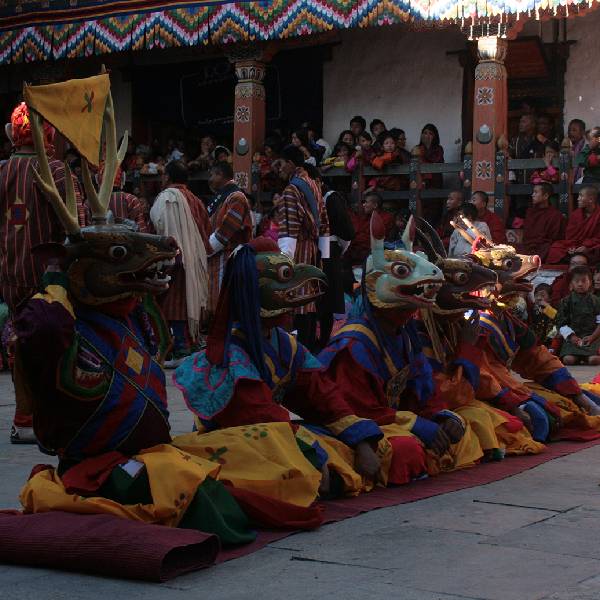
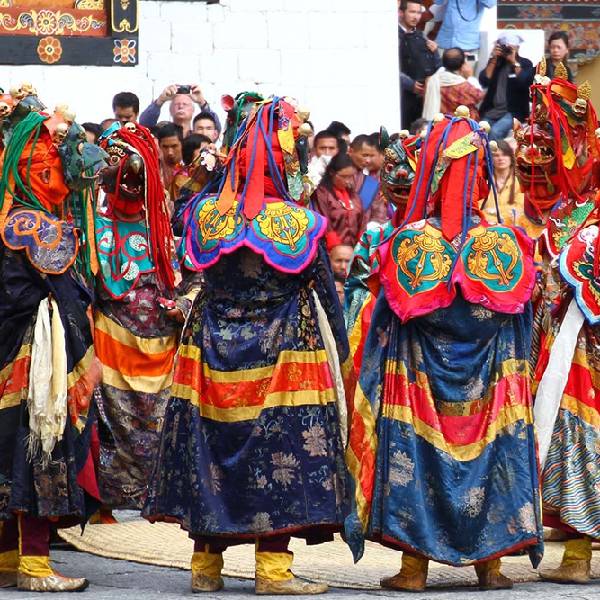
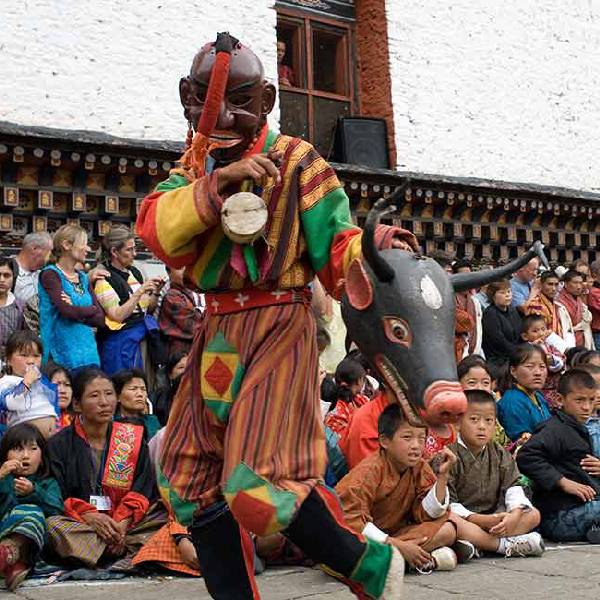
The most recognisable part of Mongar Tshechu is cham, Bhutan’s sacred masked dance tradition. Performers wear elaborate robes and symbolic masks representing deities, guardians, animals, teachers, and figures from Buddhist narratives. Drums, cymbals, horns, and chanting accompany their carefully organised movements. Although the dances are visually impressive, they are not staged simply as entertainment. Their religious purpose is connected with Buddhist teachings, spiritual reflection, and the encouragement of positive actions.
Mongar Tshechu is closely connected with Guru Rinpoche, or Padmasambhava, whose influence remains central to Bhutanese Vajrayana Buddhism. For devotees, attending the festival provides an opportunity to receive blessings, create merit, and reconnect with religious teachings. The Mongar Dzongkhag Administration reported that thousands gathered for the 63rd annual Mongar Tshechu in 2025, demonstrating the continuing importance of the event to local communities.
One of the festival’s most meaningful moments comes with the unfurling of the Guru Rinpoche thongdrel. This large sacred textile is displayed only on special occasions and is treated as an object of blessing rather than simply as a work of art. The 2025 Mongar Tshechu officially concluded with the unfurling of the Guru thongdrel as large crowds gathered at Mongar Dzong.
Traditional songs and folk dances also form part of the festival atmosphere. Between the more solemn religious performances, local men and women may present cultural dances in traditional dress. Families spend much of the day together, meet relatives and neighbours, share food, and watch the programme. Children attend alongside parents and grandparents, allowing festival customs, religious etiquette, music, clothing, and community responsibilities to pass naturally between generations.
Mongar Tshechu also attracts people from beyond the immediate town. Festival information notes that residents from areas such as Trashigang, Trashiyangtse, and Lhuentse travel to Mongar for the celebration. This wider participation makes the event an important social gathering for eastern Bhutan as well as a religious occasion.
For travellers, the festival offers a valuable reason to explore a part of Bhutan that receives fewer international visitors than the well-known western destinations. Mongar is surrounded by a dramatic landscape of mountains, deep valleys, forests, and rural settlements. The district is also known for traditional textiles, fabrics, and woodcraft.
Experiencing Mongar Tshechu can therefore become part of a wider journey through eastern Bhutan rather than an isolated festival visit. Travellers can combine Mongar with nearby regions such as Trashigang, Lhuentse, and Trashiyangtse, experiencing monasteries, villages, mountain roads, traditional architecture, and local communities along the way.
Visitors should remember that the festival belongs first to the local community. Areas reserved for monks and dancers should remain clear, and worshippers should not be blocked for photographs. Photography inside religious spaces may be restricted, while close portraits of monks, elderly devotees, children, or individual residents should be taken only with permission.
Arriving early is recommended because the dzong courtyard becomes increasingly busy as the main performances begin. Exact dance times may change according to religious requirements, so spending several hours at the festival usually provides a better experience than planning a visit around only one performance. Comfortable footwear and layered clothing are also useful for a full day at the venue.
What makes Mongar Tshechu especially appealing is its strong eastern Bhutanese community character. It does not rely only on colourful costumes or dramatic masks. Families return each year for worship, neighbours reconnect, monks conduct sacred rituals, performers preserve inherited dances, and younger generations grow up participating in traditions that remain important to their communities.
At its heart, Mongar Tshechu in Bhutan is a celebration of Buddhist faith, cultural identity, and continuity. Sacred cham dances, prayer, ritual music, the Guru Rinpoche thongdrel, traditional clothing, and family gatherings transform Mongar Dzong into a living centre of eastern Bhutanese culture. For travellers seeking a festival beyond Bhutan’s best-known western destinations, Mongar Tshechu offers a meaningful and memorable introduction to the traditions of the east.