Punakha Drubchen
Punakha Drubchen is one of Bhutan’s most historically distinctive festivals, celebrated annually at the magnificent Punakha Dzong. Unlike many Bhutanese festivals that focus mainly on sacred masked dances, Punakha Drubchen combines Buddhist rituals with a dramatic recreation of Bhutan’s 17th-century defence against Tibetan forces. Local men appear as traditional warriors, monks conduct religious ceremonies, and the dzong courtyard becomes a living stage for an important chapter in Bhutanese history. Current 2026 festival calendars list Punakha Drubchen from 24 to 26 February 2026, followed by Punakha Tshechu from 27 February.
The festival is closely linked with Zhabdrung Ngawang Namgyal, the spiritual and political leader credited with unifying Bhutan during the 17th century. During this period, Tibetan forces invaded Bhutan several times and sought possession of the sacred Ranjung Kharsapani relic kept under the protection of the Zhabdrung. Bhutanese forces eventually defeated the invaders, and Punakha Drubchen was established to preserve the memory of that victory.
This historical background makes Punakha Drubchen very different from an ordinary cultural performance. Its best-known feature is the battle reenactment performed by pazaps, or traditional militia men. Dressed in old-style warrior clothing and carrying ceremonial weapons, shields, banners, and other military objects, the pazaps recreate scenes representing Bhutan’s defence against the invading forces.
The performances are energetic and theatrical, yet their purpose goes beyond entertainment. They preserve the memory of a period when local communities played an important role in defending the country before Bhutan possessed a modern standing army. Through movement, ceremonial formations, music, and ritual actions, an event from centuries ago is retold before a new generation.
Punakha Dzong provides an especially meaningful setting. Known formally as Pungtang Dechen Photrang Dzong, the fortress stands where the Pho Chhu and Mo Chhu rivers meet. Punakha became extremely important during the time of Zhabdrung Ngawang Namgyal and remains the winter residence of Bhutan’s Central Monastic Body and Je Khenpo.
Religious ceremonies remain central throughout the Drubchen. Monks perform prayers and rituals intended to bring peace, protection, and favourable conditions to the country and its people. Sacred music, chanting, ceremonial instruments, incense, and Buddhist offerings contribute to an atmosphere where national history and religious devotion naturally come together.
One of the most memorable sequences traditionally takes the historical story beyond the dzong courtyard toward the Mo Chhu river. Ritual actions recall the Zhabdrung’s strategy during the conflict and the protection of the sacred relic sought by the invading forces. The reenactment allows spectators to understand the festival as more than symbolic dance; it connects directly with the historical identity of Punakha and Bhutan’s emergence as a unified state.
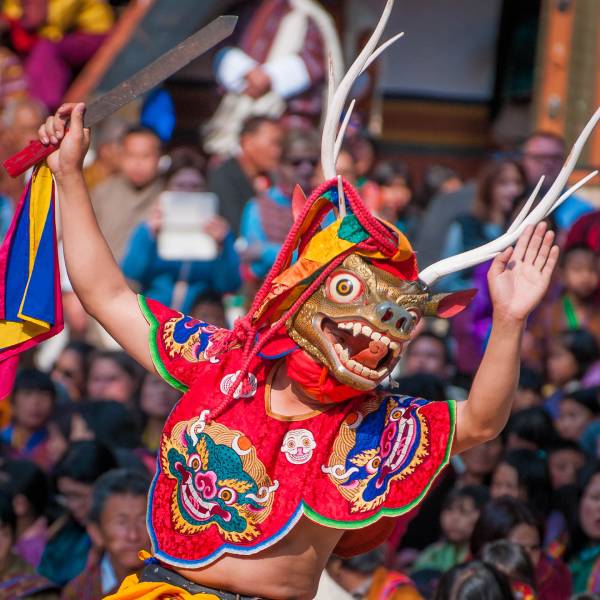
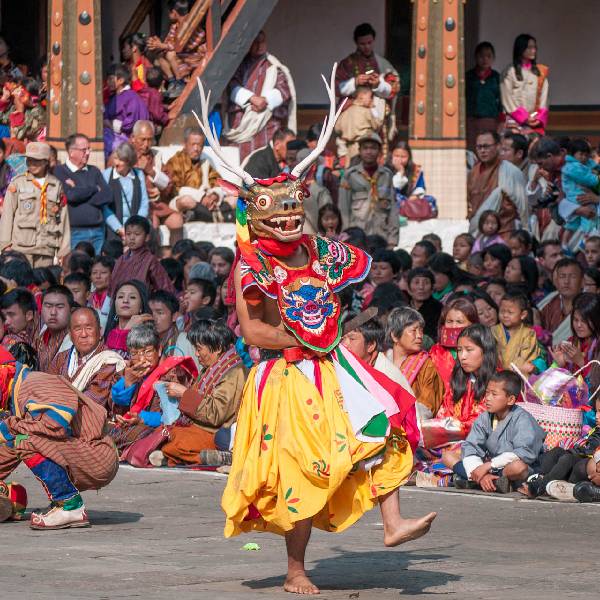
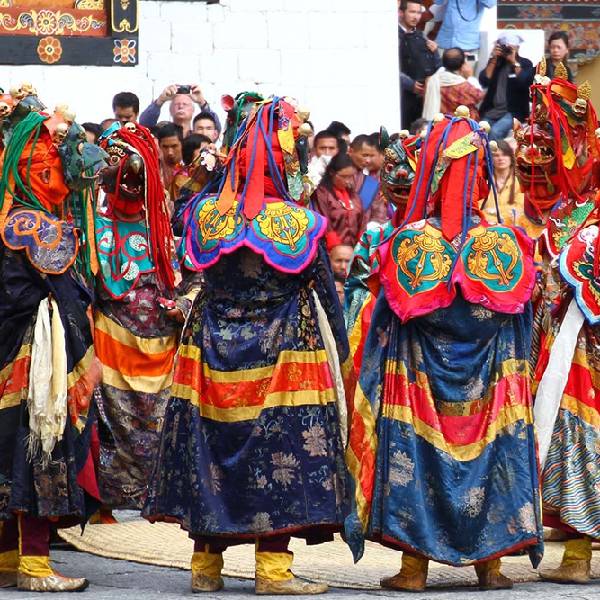
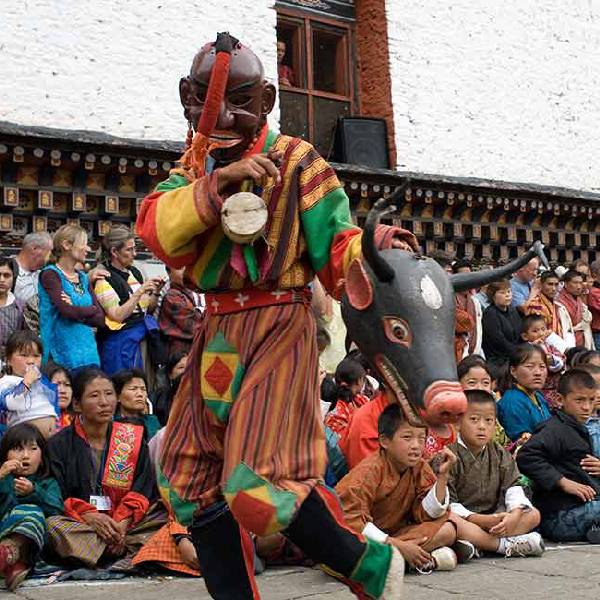
Traditional masked dances and ceremonial performances may also appear during the wider festival period. Colourful robes, masks, drums, horns, and cymbals provide a visual contrast to the martial scenes. These sacred performances reflect the Buddhist foundation of the celebration and remind visitors that Punakha Drubchen is ultimately a religious observance as well as a historical commemoration.
For local people, the event is also an important community gathering. Families arrive wearing their finest gho and kira, meet relatives, watch the performances, make offerings, and spend time around the dzong. Children attend alongside parents and grandparents, allowing stories about the Zhabdrung, the historic battles, and Punakha’s religious importance to continue through direct participation.
For travellers, Punakha Drubchen offers something quite different from Bhutan’s larger tshechus. Rather than simply seeing masked dances, visitors witness a carefully preserved historical narrative brought to life through traditional warriors, ritual action, religious ceremonies, and one of Bhutan’s most important fortresses.
Visitors should arrive early, as the courtyard can become crowded during major performances. Areas reserved for monks, warriors, and ceremonial processions should remain clear. Photography may be possible outdoors, but temple interiors can have restrictions, and close portraits of monks, performers, or worshippers should be taken respectfully.
February in Punakha is generally suitable for spending time outdoors, although mornings and evenings can feel cool. Comfortable footwear and layered clothing are useful for visitors planning to remain at the festival for several hours.
At its heart, Punakha Drubchen in Bhutan is a celebration of memory, faith, and national identity. Traditional warriors, sacred rituals, Buddhist prayers, historic storytelling, and the extraordinary surroundings of Punakha Dzong bring a 17th-century chapter of Bhutanese history into the present. For travellers interested in understanding Bhutan beyond its landscapes and monuments, Punakha Drubchen offers a rare opportunity to see history remembered not through a museum display, but through a living tradition maintained by monks, communities, and generations of participants.