Punakha Tshechu
Punakha Tshechu is one of Bhutan’s important annual Buddhist festivals, celebrated within the magnificent surroundings of Punakha Dzong. For three days, the historic fortress becomes a gathering place for monks, sacred dancers, local families, pilgrims, and visitors who come to experience prayer, traditional music, colourful costumes, folk performances, and religious blessings. In 2026, Punakha Tshechu was celebrated from 27 February to 1 March, immediately following the three-day Punakha Drubchen.
Although the two celebrations take place consecutively at the same dzong, Punakha Tshechu and Punakha Drubchen are separate events. The Drubchen is particularly known for rituals and the dramatic remembrance of Bhutan’s seventeenth-century defence against Tibetan forces. Punakha Tshechu shifts the focus toward sacred Buddhist dances, teachings, blessings, and community celebration. This distinction is important when planning a visit because experiencing both provides two very different views of Bhutanese heritage.
Punakha Tshechu is relatively recent compared with many of Bhutan’s centuries-old festivals. It was formally introduced in 2005 by the 70th Je Khenpo, Trulku Jigme Choedra, together with the then Home Minister, following requests from the Punakha administration and local community. The purpose was to strengthen the preservation of Buddhist teachings and honour the spiritual legacy associated with Zhabdrung Ngawang Namgyal.
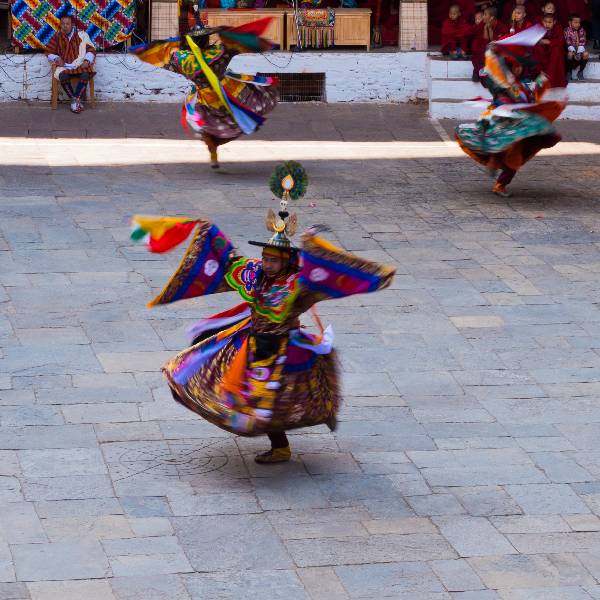
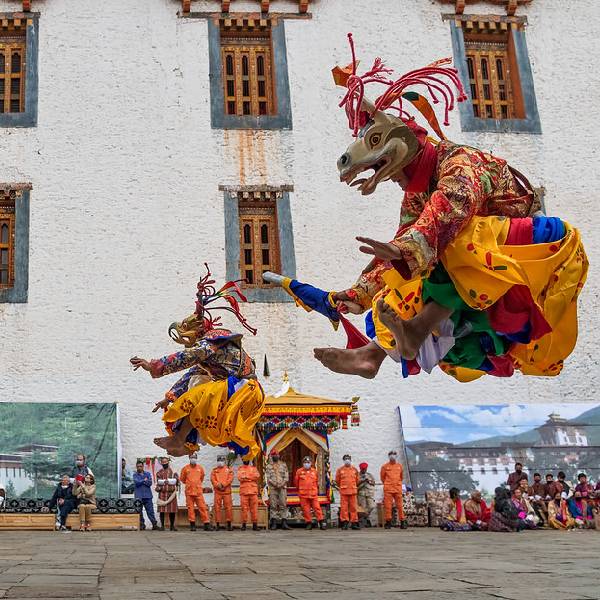
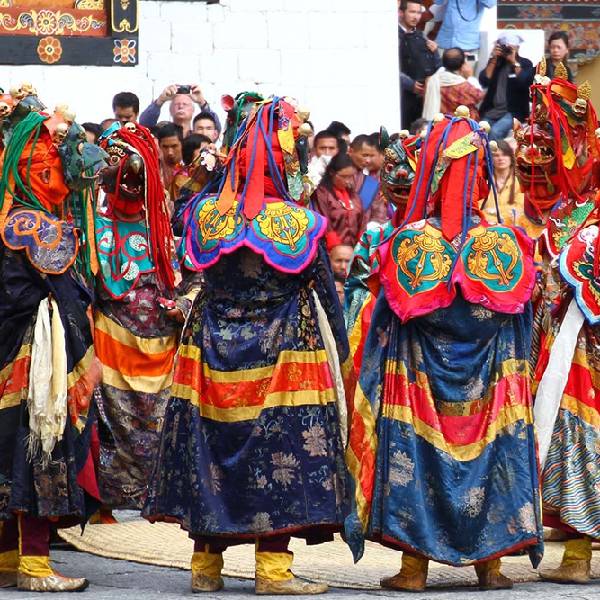
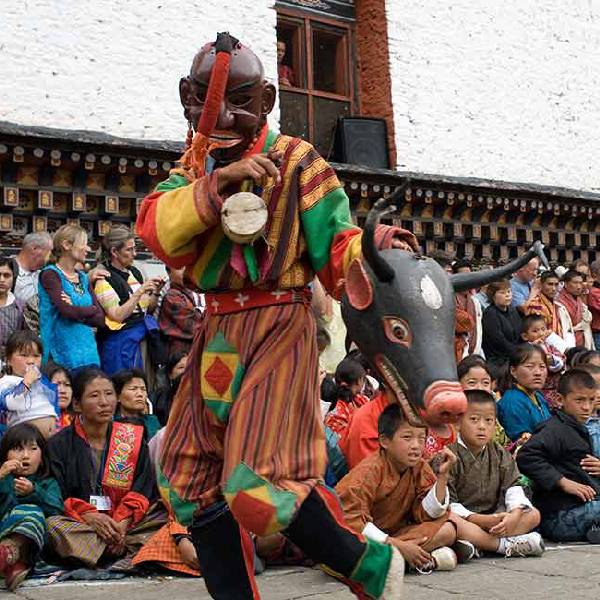
The festival’s most striking feature is cham, Bhutan’s sacred masked dance tradition. Monks and trained performers appear in elaborate brocade robes, ceremonial hats, and symbolic masks while drums, cymbals, horns, and chanting accompany their movements. The characters represented through cham can include Buddhist teachers, protective deities, animals, and other figures connected with religious stories and teachings.
These dances are not simply performances created for spectators. Their movements and symbolism communicate Buddhist ideas about compassion, wisdom, impermanence, moral responsibility, protection, and the consequences of human actions. For Bhutanese devotees, attending the festival is also an opportunity to make merit, receive blessings, and reconnect with Buddhist teachings.
Traditional songs and folk dances add a social and cultural dimension between the more solemn religious ceremonies. Local families arrive wearing their finest gho and kira, meet relatives and neighbours, share food, and spend much of the day within the festival grounds. Children attend alongside parents and grandparents, allowing customs, music, clothing, religious etiquette, and community traditions to continue naturally between generations.
Punakha Dzong gives the celebration an extraordinary setting. Standing at the meeting point of the Pho Chhu and Mo Chhu rivers, the fortress has played an important role in Bhutan’s political and religious history. Punakha also continues to serve as the winter residence of Bhutan’s Central Monastic Body, strengthening the festival’s connection with active Buddhist life rather than heritage alone.
One of the most anticipated moments comes toward the conclusion of the tshechu with the display of a large sacred thongdrol. This monumental religious textile is unfurled for devotees to view and receive blessings. Such displays are treated as sacred ceremonies, and worshippers may arrive early to ensure they can witness the image before it is carefully rolled away again.
For travellers, Punakha Tshechu offers an excellent opportunity to experience Bhutanese culture within one of the country’s most impressive historic settings. The festival can also be combined with Punakha Drubchen, allowing visitors to experience six consecutive days of ceremonies and cultural activity in 2026. Punakha Dzongkhag Administration officially announced arrangements for the combined annual Dromchoe and Tshechu celebrations during this period.
Visitors should arrive early, particularly on important ceremony days, because the dzong courtyard can become crowded. Areas reserved for monks and dancers should remain clear, and photography rules inside religious spaces must be respected. Close photographs of monks, worshippers, elderly residents, or children should be taken only with permission.
Late February and early March are also pleasant periods for exploring Punakha. Spending additional time in the valley allows travellers to experience its rivers, villages, monasteries, agricultural landscapes, and historic sites beyond the festival itself.
At its heart, Punakha Tshechu in Bhutan brings Buddhist faith, sacred performance, family life, and community heritage together. Masked dances, ritual music, traditional clothing, prayer, the sacred thongdrol, and the remarkable surroundings of Punakha Dzong create a celebration that feels both spiritual and deeply connected with local life. For travellers interested in Bhutan’s living traditions, Punakha Tshechu provides a meaningful experience beyond ordinary sightseeing.