Tangsibi Mani
Tangsibi Mani is a traditional Buddhist festival celebrated in Tangsibi village in the Ura area of Bumthang, one of Bhutan’s most culturally important regions. The festival brings together spiritual practice, community participation, traditional dress, ritual performances, and village hospitality in a setting closely connected to everyday Bhutanese life. For travellers who want to experience Bhutan beyond its famous dzongs and monasteries, Tangsibi Mani offers an opportunity to witness a local celebration where religion and community remain closely linked.
The festival is associated with the village’s local lhakhang, where residents, monks, lay religious practitioners, and visitors gather for prayers and ceremonial activities. Tangsibi Mani is observed according to the Bhutanese lunar calendar, so the corresponding Gregorian dates can change from year to year. It is generally celebrated during the first part of the year, often around February or March. Travellers planning a visit should therefore confirm the official dates before arranging flights, hotels, guides, and transport in Bumthang.
One of the most meaningful aspects of Tangsibi Mani is its strong religious character. The festival is rooted in Buddhist devotion and is traditionally regarded as an occasion for prayer, blessings, and collective spiritual practice. Local people attend not simply to watch performances but to participate in a tradition preserved within the community for generations. The gathering creates an atmosphere where visitors can see how Bhutanese Buddhism continues to influence social life, local customs, family traditions, and community identity.
Prayer and recitation are important parts of the celebration. During the festival, participants may gather inside the temple or around its courtyard for religious ceremonies, chanting, and devotional activities. The repeated recitation of Buddhist prayers creates a calm and meditative atmosphere that contrasts with the colourful social activity taking place around the festival grounds. For visitors, observing these moments can provide a deeper understanding of Bhutanese spirituality and the importance of shared religious practice in rural communities.
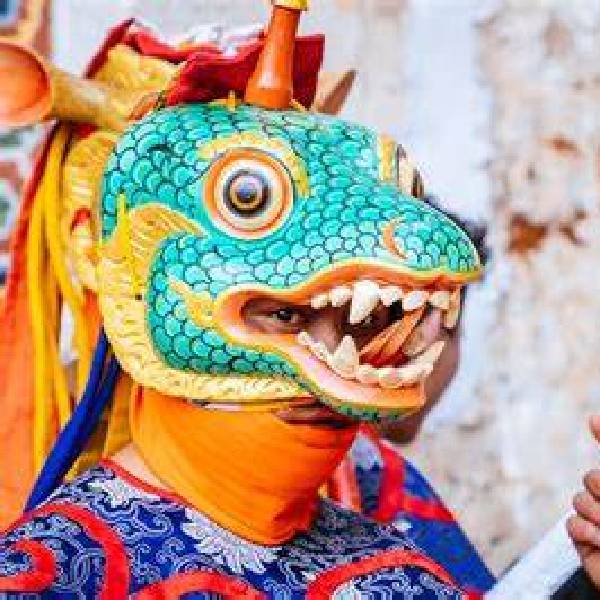
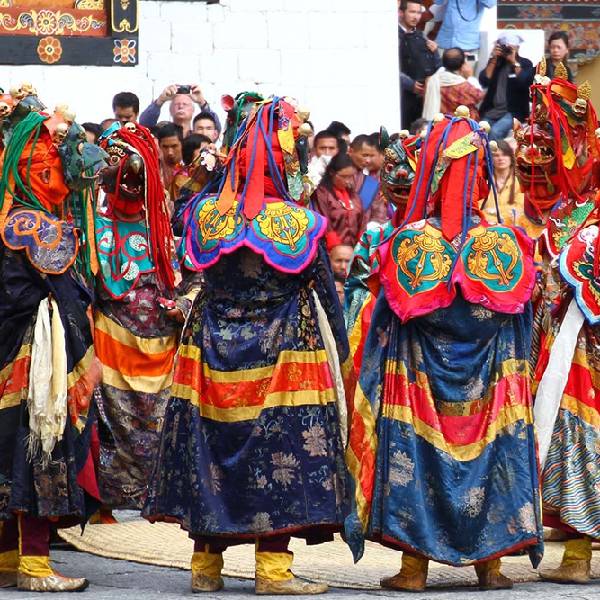
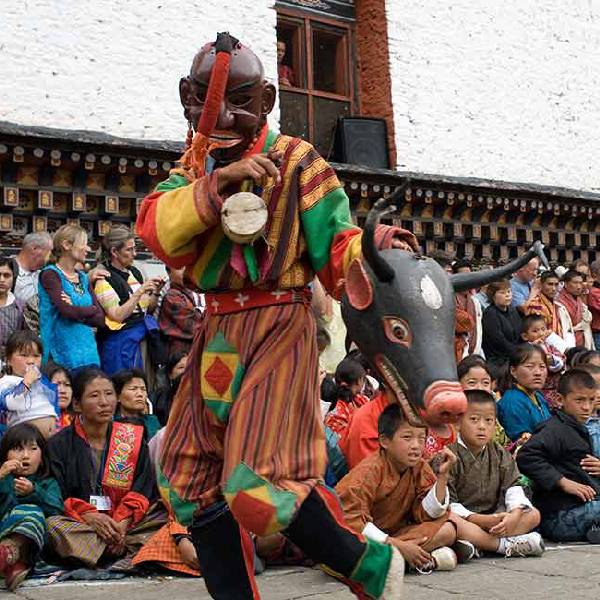
Traditional performances also contribute to the atmosphere of Tangsibi Mani. Sacred mask dances, commonly known as Cham dances, are an important feature of Bhutanese religious festivals. Dancers wear elaborate costumes and symbolic masks while performing structured movements connected with Buddhist stories, teachings, protective figures, and spiritual symbolism. Traditional musical instruments accompany many such performances, helping create a memorable combination of sound, colour, movement, and ceremony for the community and visiting travellers.
The festival is also a major social occasion for the people of Tangsibi and neighbouring communities. Families arrive dressed in traditional Bhutanese clothing, while friends and relatives gather to meet one another, participate in ceremonies, enjoy the festival atmosphere, and share time together. This strong community character is one reason smaller village festivals can be especially rewarding for cultural travellers. Rather than feeling like a performance created for tourists, Tangsibi Mani remains connected to the religious and social life of the local community.
Tangsibi village lies in Bumthang, a region known for its temples, monasteries, valleys, traditional settlements, and connection with Bhutanese religious heritage. The journey to the festival can therefore be combined with a broader exploration of Bumthang. Travellers can spend time discovering cultural landmarks, walking through rural landscapes, visiting communities, and learning about traditional ways of life across the region. This makes Tangsibi Mani particularly appealing to visitors interested in culture, spirituality, photography, local traditions, and slower forms of travel.
Attending Tangsibi Mani requires sensitivity to local customs because the event has an important religious purpose for the community. Visitors should wear respectful clothing and avoid interrupting prayers, processions, or performances. Photography can be a wonderful way to document the colourful festival atmosphere, but travellers should ask before taking close photographs of monks or local residents. Religious ceremonies may sometimes have photography restrictions, so following the advice of a licensed guide and local festival organisers can help visitors experience the event respectfully.
Because Tangsibi Mani takes place in a village environment, travellers should prepare for conditions that may differ from larger festivals in major Bhutanese towns. Comfortable walking shoes, warm layers, sun protection, and drinking water can make the visit more enjoyable. Weather in the central valleys may change during the day, particularly during the cooler months when the festival is commonly held. Arriving early can also provide visitors with more time to understand the surroundings, find a suitable place to observe activities, and experience the atmosphere before major ceremonies begin.
A visit to Tangsibi Mani can form part of a longer cultural journey through Bhutan. Spending additional time in Bumthang gives visitors an opportunity to understand the festival within its wider cultural and religious setting instead of treating it as an isolated sightseeing event. Depending on the length of the trip, Bumthang can also be combined with destinations such as Trongsa, Punakha, Thimphu, and Paro. A knowledgeable local guide can help explain the rituals, festival etiquette, religious symbolism, and cultural traditions visitors encounter during the journey.
Tangsibi Mani is ideal for travellers looking for an intimate Bhutan festival experience rooted in community life and Buddhist tradition. Its combination of prayers, rituals, traditional performances, village hospitality, colourful clothing, and peaceful surroundings provides a memorable insight into Bhutan’s living cultural heritage. Journey DMC Bhutan can help travellers plan their visit around the confirmed festival schedule and combine Tangsibi Mani with accommodation, transportation, professional guiding, and other cultural experiences across Bumthang and Bhutan, creating a journey that is meaningful, comfortable, and well organised.