Black-necked Crane Festival
Every November, the quiet landscape of Phobjikha Valley becomes the setting for one of Bhutan’s most unusual celebrations. The Black-Necked Crane Festival welcomes the migratory cranes that return to the valley for the winter while bringing local residents, schoolchildren, monks, conservationists, and visitors together for a day of cultural performances and environmental awareness. In 2026, the festival will take place on 11 November at Gangtey Gonpa in Wangdue Phodrang. Bhutan’s Department of Tourism includes the event in its official national festival calendar.
Phobjikha has a special relationship with the black-necked crane. These graceful birds migrate to Bhutan during the colder months, generally arriving from October and remaining until around March. Among Bhutan’s main crane habitats, Phobjikha receives the largest wintering population. The valley’s wetlands, open grasslands, and harvested agricultural fields provide places where cranes can feed and spend the night.
For people living in the valley, the arrival of the cranes is much more than a wildlife sighting. The birds have become part of the seasonal rhythm of local life. Their appearance signals the beginning of winter, and communities have developed a strong sense of responsibility toward protecting both the cranes and the landscape they depend upon. The Royal Society for Protection of Nature describes the cranes as highly valued by local people and notes that the annual festival allows residents to renew their commitment to conservation.
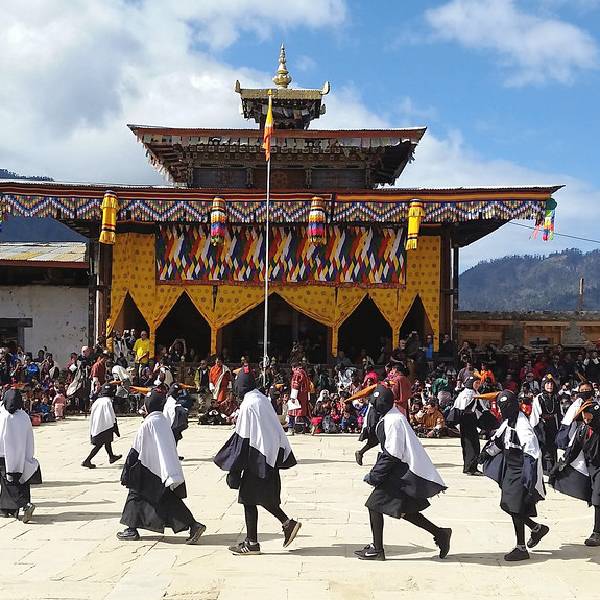
The festival itself began in 1998 as part of a community-oriented conservation initiative. The Royal Society for Protection of Nature helped establish the event with the aim of connecting environmental protection with local participation and sustainable tourism. The earliest celebrations were held in the valley before the venue later moved to the courtyard of Gangtey Gonpa. Today, the monastery provides a striking setting overlooking the broader Phobjikha landscape.
One of the most memorable parts of the programme is the crane dance performed by local schoolchildren. Children wear costumes inspired by the black-and-white colouring of the birds and imitate their slow movements, extended wings, courtship behaviour, and elegant steps. The performance transforms wildlife observation into something younger generations can understand and share creatively. It is not simply entertainment; it reinforces the idea that protecting the cranes is part of the community’s own cultural responsibility.
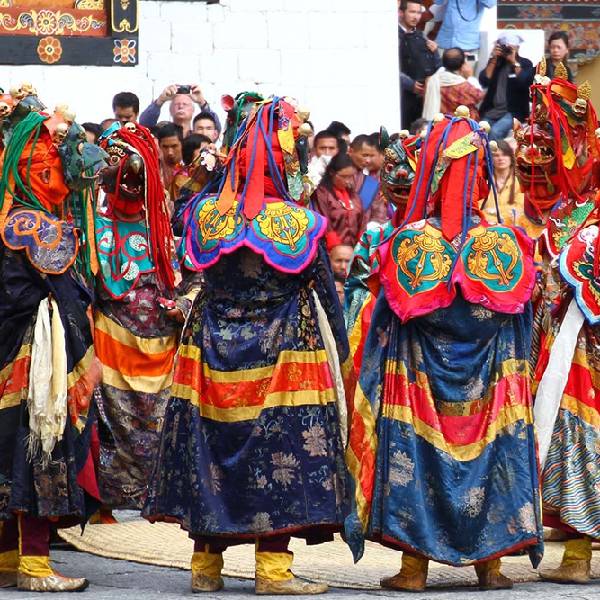
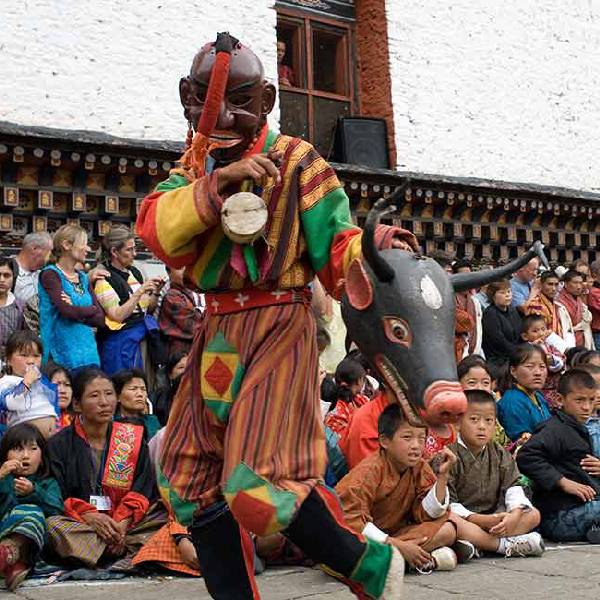
Traditional Bhutanese performances add further variety to the day. Local men and women may present folk songs and dances, while monks from Gangtey’s religious community have participated in sacred masked dances. Environmental songs and performances connected with crane conservation have also formed part of past programmes. This mix gives the festival an identity quite different from a conventional religious tshechu or wildlife exhibition.
The setting is equally important. Gangtey Gonpa stands above the broad Phobjikha Valley, while the wetlands below provide vital winter habitat for the cranes. The Royal Society for Protection of Nature describes Phobjikha as Bhutan’s largest high-altitude natural wetland and notes that thousands of local residents share this landscape, relying mainly on agriculture and livestock. The relationship between human settlement and crane habitat makes conservation here particularly dependent on community participation.
Visitors attending the festival can also learn more about the birds at the Black-Necked Crane Education Centre in Phobjikha. The centre was established to improve public understanding of crane ecology, local plants and wildlife, conservation initiatives, and the culture of the surrounding communities. It provides useful context before or after watching the birds in the valley.
Black-necked cranes spend much of the winter feeding in open farmland and wetlands. They consume leftover grains from harvested fields as well as insects, plant material, seeds, and other available food. Wet areas provide safer places for resting overnight. Because agriculture and wetland ecology overlap so closely, changes in land use, construction, pollution, and disturbance can affect the quality of their habitat.
This connection explains why the festival places conservation at the centre rather than treating the cranes only as a tourist attraction. Visitors are encouraged to appreciate the birds without disturbing them. Maintaining distance, keeping noise low around feeding areas, remaining on established paths, and avoiding unnecessary movement through wetlands all help protect the environment the cranes depend upon.
November is an excellent period for observing the wider valley as well. Fields have taken on their winter appearance, mornings can be cold and clear, and cranes may be visible feeding against the backdrop of forested hills. Travelers should bring warm layers because temperatures drop considerably in the mornings and evenings. Binoculars are useful for birdwatching without approaching the cranes too closely.
The festival also offers an opportunity to see how conservation can support community life. Local people participate as performers, organisers, guides, hosts, and artisans, while visitors gain a better understanding of why protecting Phobjikha matters. The Royal Society for Protection of Nature originally developed the celebration partly to create community benefits that reinforce support for preserving crane habitat.
For photographers, the combination of traditional Bhutanese dress, schoolchildren performing the crane dance, monastery architecture, open valley scenery, and the birds themselves can be exceptional. Wildlife photography should nevertheless be approached carefully. Long lenses are preferable to moving closer, and cranes should never be chased or surrounded for a photograph.
At its heart, the Black-Necked Crane Festival in Bhutan celebrates a relationship rather than simply a species. Each winter, cranes return to Phobjikha, and the community welcomes them through dance, music, education, and renewed promises of protection. The festival shows how cultural identity and environmental responsibility can support one another. For travelers interested in both Bhutanese traditions and nature, spending 11 November 2026 in Phobjikha offers a meaningful opportunity to experience a celebration shaped by the people, wetlands, mountains, and remarkable birds that share the valley.