Phuntsholing Tshechu
Phuntsholing Tshechu is an important annual Buddhist festival celebrated in Phuentsholing, Bhutan’s lively southern gateway. The three-day gathering brings monks, sacred masked dancers, local families, cultural performers, and visitors together for religious ceremonies, traditional music, blessings, and community celebration. In 2026, the annual Phuentsholing Tshechu was held from 1 to 3 January at Palden Tashi Chholing Shedra. The official Phuentsholing Thromde Administration announced these dates in December 2025, and festival activities began on 1 January as scheduled.
The location gives the festival a character quite different from celebrations held in Bhutan’s high mountain valleys. Phuentsholing sits along Bhutan’s southern border with India, making it an important entry point and commercial centre. The festival allows residents of this busy border town to step away from everyday routines and gather around Buddhist traditions, prayer, performance, and shared cultural identity.
The celebration takes place at Palden Tashi Chholing Shedra, a Buddhist learning centre overlooking Phuentsholing and the surrounding landscape. The monastery was inaugurated in 2014 and serves as a place where young monks study Buddhist philosophy and religious practice. Its main temple contains sacred images and provides an appropriate spiritual setting for the annual tshechu.
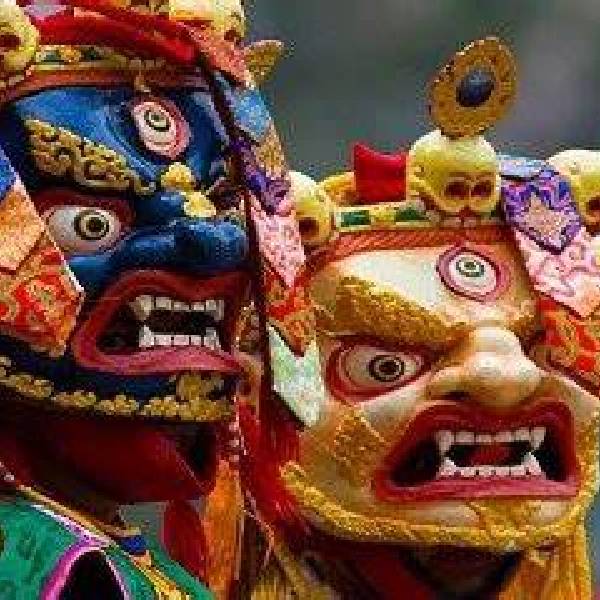
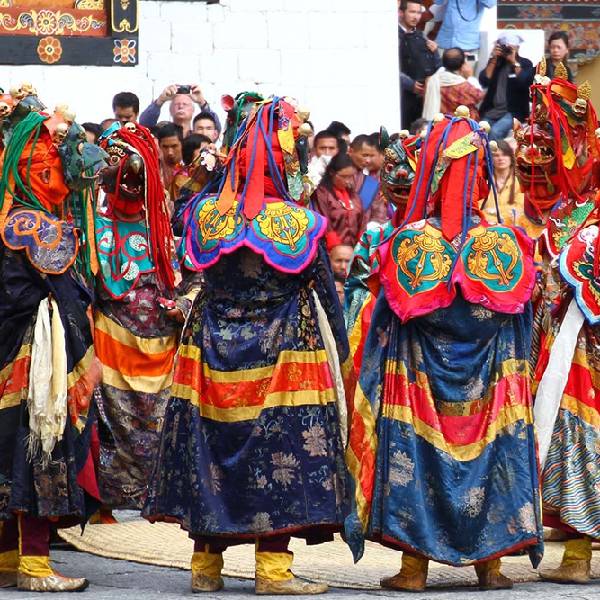
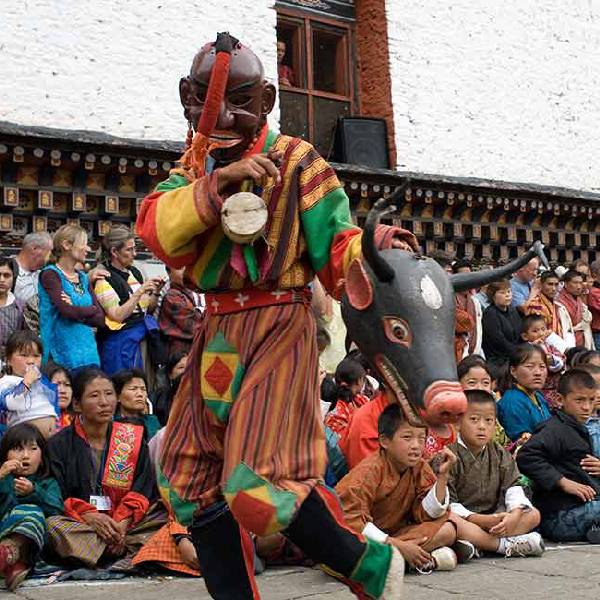
The most visually striking part of Phuntsholing Tshechu is cham, Bhutan’s sacred masked dance tradition. Performers wear colourful robes and symbolic masks while moving to the sounds of drums, cymbals, horns, and other ceremonial instruments. The dances may represent Buddhist protectors, enlightened beings, animals, teachers, or characters connected with religious stories.
For Bhutanese devotees, cham carries meaning beyond its appearance. The performances use movement, costume, music, and symbolism to communicate Buddhist ideas about compassion, wisdom, protection, moral responsibility, and the overcoming of negative influences. The existing festival page also identifies religious ceremonies, masked dances, and cultural performances as central features of Phuntsholing Tshechu.
Traditional songs and folk dances bring another dimension to the festival. Local performers appear in Bhutanese dress, while families gather around the grounds wearing their finest gho and kira. Between religious ceremonies, people meet relatives, share food, talk with neighbours, and enjoy the atmosphere of the annual gathering.
This social role is particularly important in a place such as Phuentsholing. The town brings together people from different parts of Bhutan for business, education, government work, and trade. During the tshechu, these different communities share one cultural space centred on Buddhist practice and Bhutanese traditions.
The festival has also grown in recent years. Bhutan Broadcasting Service reported that the Phuentsholing event, which had previously been organised as a one-day celebration, was expanded into a three-day tshechu. This longer format provides more time for sacred masked dances, traditional performances, religious activities, and community participation.
For travellers entering Bhutan by road from India, Phuntsholing Tshechu can provide an interesting introduction to the country before continuing towards Thimphu, Paro, Punakha, or other destinations. Instead of beginning the journey only with immigration procedures and road travel, visitors can experience a living Buddhist celebration close to Bhutan’s southern entrance.
The atmosphere is also different from the enormous festival gatherings of Paro or Thimphu. Phuntsholing Tshechu remains strongly connected with the local community, allowing visitors to observe families, monks, performers, and residents interacting within a comparatively intimate setting.
Visitors should remember that the festival is first a religious and community occasion. Areas reserved for monks and dancers should remain clear, sacred objects should not be touched, and worshippers should be given enough room to pray or receive blessings. Photography inside monastery buildings may be restricted.
Close photographs of monks, elderly devotees, children, or individual performers should be taken only after permission. Spending several hours at the venue is usually more rewarding than arriving only for a single performance because programmes may change according to religious requirements.
Phuentsholing’s warmer southern climate also differs from Bhutan’s higher-altitude festival destinations. Comfortable clothing suitable for a religious venue, sun protection, and good walking shoes can make a full festival day more enjoyable.
At its heart, Phuntsholing Tshechu in Bhutan brings Buddhist devotion into the everyday life of the country’s busiest southern gateway. Sacred dances, ritual music, prayers, traditional clothing, family gatherings, and the peaceful setting of Palden Tashi Chholing Shedra create a celebration where spiritual tradition and modern town life meet naturally. For travellers seeking a cultural experience beyond Bhutan’s most famous festival destinations, Phuntsholing Tshechu offers a meaningful introduction to the country’s living Buddhist heritage.