Chhukha Tshechu
Chhukha Tshechu is an annual Buddhist festival held in Chhukha Dzongkhag in southwestern Bhutan. For three days, the courtyard of Chhukha Dzong becomes a place of prayer, masked dances, folk performances, family gatherings, and religious blessings. The festival is dedicated to Guru Rinpoche, or Padmasambhava, whose influence remains central to Bhutanese Vajrayana Buddhism. In 2026, Chhukha Tshechu will be celebrated from 19 to 21 October at Chhukha Dzong.
Tshechus occupy an important position in Bhutanese religious life. The word refers to the tenth day of a lunar month, a date traditionally associated with important events in the life of Guru Rinpoche. Different districts hold their festivals at different points in the year, creating a calendar of local celebrations rather than one nationwide event. Chhukha’s three-day observance combines Buddhist ritual with the cultural traditions of the communities living throughout the district.
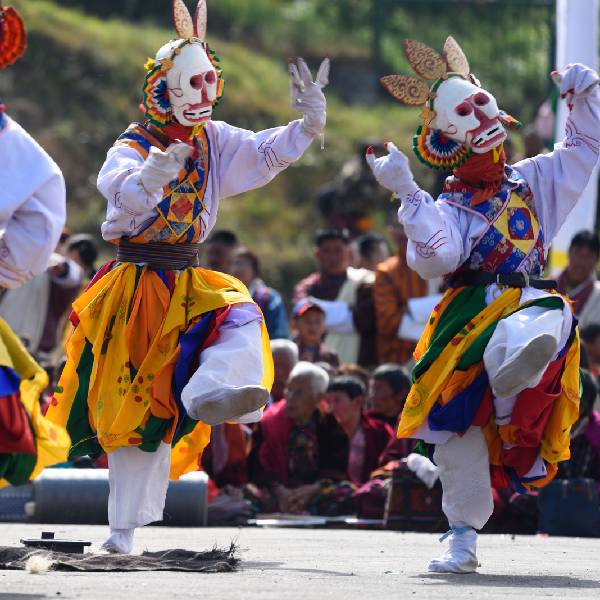
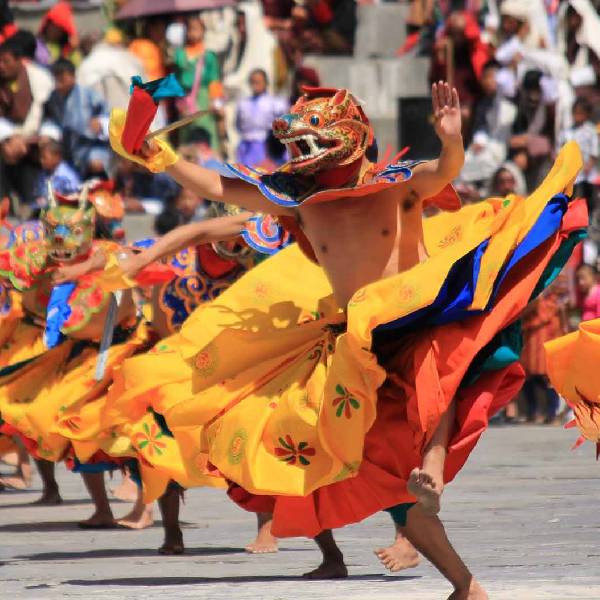
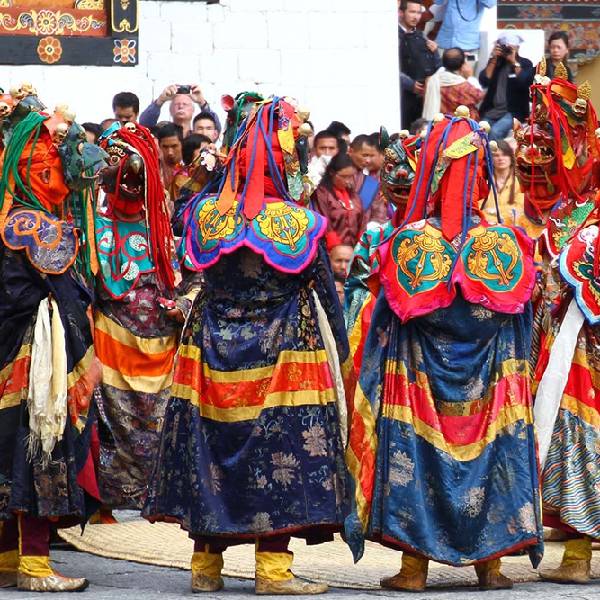
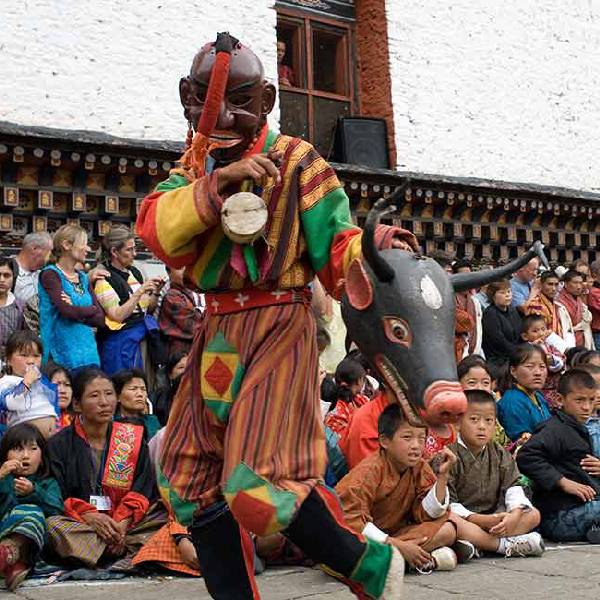
The most recognisable feature of the festival is cham, the sacred masked dance. Monks and trained lay performers wear elaborate costumes and masks representing deities, spiritual protectors, teachers, animals, and characters drawn from Buddhist religious narratives. The dances are carefully structured rituals rather than ordinary stage entertainment. Their movements communicate ideas about morality, impermanence, spiritual protection, and the consequences of human actions. Chhukha Tshechu includes several forms of masked dance alongside traditional folk performances.
Drums, cymbals, horns, and other ritual instruments provide the musical background as performers move across the dzong courtyard. Some dances are solemn and measured, while others introduce dramatic or humorous characters. The combination of masks, brightly patterned robes, rhythmic movement, and monastery architecture creates an atmosphere that is visually striking while remaining deeply connected with Buddhist practice.
Local residents are not merely spectators. Families travel from surrounding communities to attend prayers, receive blessings, meet relatives, and spend the day together. Many people wear their finest gho and kira, Bhutan’s traditional dress, giving the courtyard a rich mixture of colours and patterns. Tshechu days also create opportunities for relatives and neighbours who may live in different settlements to reconnect around a shared religious occasion.
Between the major dances, traditional songs and folk performances add a social dimension to the programme. These presentations reflect local cultural life alongside the more formal monastic rituals. Children, elderly residents, monks, officials, and visitors may all occupy the same festival space, making Chhukha Tshechu a community gathering as much as a sequence of religious ceremonies. Published festival descriptions identify both masked dances and traditional folk songs and dances as central parts of the three-day programme.
The final day carries particular significance because a large thongdrol depicting Guru Rinpoche is traditionally unfurled. A thongdrol is a monumental religious textile displayed only on special occasions. Devotees gather to view the sacred image and receive its blessing before it is carefully rolled away again. The unfurling forms the principal concluding highlight of Chhukha Tshechu.
This brief display gives the final morning a noticeably different atmosphere. People may arrive early so they do not miss the ceremony, and the courtyard can become especially busy. For Buddhist devotees, seeing the thongdrol is connected with faith and merit rather than simply admiration of its artistic detail. Travelers should therefore treat the occasion as an active religious ceremony and avoid obstructing worshippers for photographs.
The location also gives Chhukha Tshechu its own identity. While festivals in Paro and Thimphu are widely known among international visitors, Chhukha offers a more locally focused setting. The festival takes place at Chhukha Dzong, allowing visitors to experience sacred performances in the architectural environment where district administration, monastic life, and community traditions intersect. The official 2026 festival schedule specifically lists Chhukha Dzong as the venue.
Travelers attending the event should allow enough time for the programme rather than expecting every important dance to occur within a short visit. Festival schedules can unfold throughout much of the day, and exact performance times may change. Arriving in the morning gives visitors more opportunity to observe ceremonies, local dress, religious dances, and the changing atmosphere of the courtyard.
Respectful behaviour is especially important inside the dzong. Visitors should follow instructions regarding footwear, photography, and access to religious areas. Monks performing rituals should not be interrupted, and people praying or receiving blessings should be given enough space. When photographing individual residents, elderly devotees, or children, asking permission is preferable to taking close portraits without acknowledgement.
October is also a practical time for festival travel in Bhutan, but mornings and evenings can feel cooler than midday. Comfortable clothing suitable for temple environments and long periods of standing or sitting is useful. Because the festival is held over three days, visitors interested in the full cultural experience may wish to attend more than one day rather than concentrating only on the final thongdrol ceremony.
What makes Chhukha Tshechu in Bhutan memorable is the way religious practice and community life share the same courtyard. Masked dancers communicate Buddhist teachings, musicians maintain rhythms passed through generations, families arrive in traditional clothing, and the sacred image of Guru Rinpoche appears during the concluding ceremony. The festival does not need the scale of Bhutan’s largest tshechus to feel meaningful. Its strength lies in the connection between monastery ritual, local participation, inherited performance, and a community returning each year to celebrate its spiritual heritage.